20 years jewelry packaging manufacturer,
Serving 1000+brands,Passed ISO9001/BV/SGS


You can share
- Share to Facebook
- Share to Google+
- Subscribe to our
- Share to Linkedin
- Share to Twitter
You can share

For the jewelry industry, suitable jewelry packaging boxes are not only the core carrier protecting the jewelry, but also the key to highlighting product quality and conveying brand personality. Rings, necklaces, and bracelets, as mainstream jewelry categories, have significant differences in shape and size, requiring differentiated choices for ring packaging boxes, necklace jewelry boxes, and bracelet storage boxes. This article provides customized packaging selection solutions for these three core jewelry categories, helping you avoid pitfalls and make efficient selections.
Choosing jewelry packaging boxes doesn't require blindly pursuing high-end options. The core principle is to balance "protection, display, and suitability," while also considering personalized needs such as customized jewelry packaging and ring packaging boxes, aligning with brand positioning. Protection prioritizes ensuring the jewelry is not bumped or oxidized during storage and transportation; display needs to highlight the characteristics of the jewelry category, making the product immediately eye-catching; suitability requires the box shape and size to precisely match the jewelry shape, avoiding boxes that are too large or too small, which would affect the overall quality.
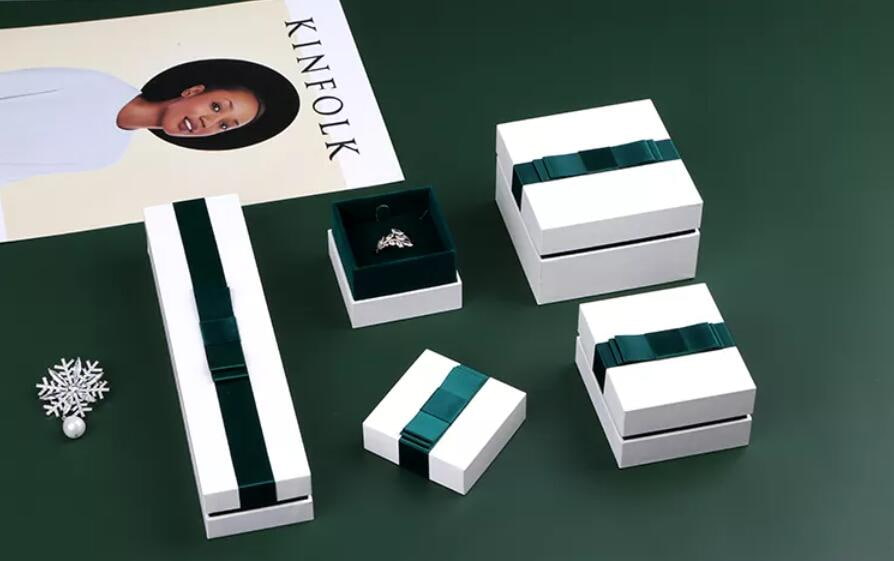
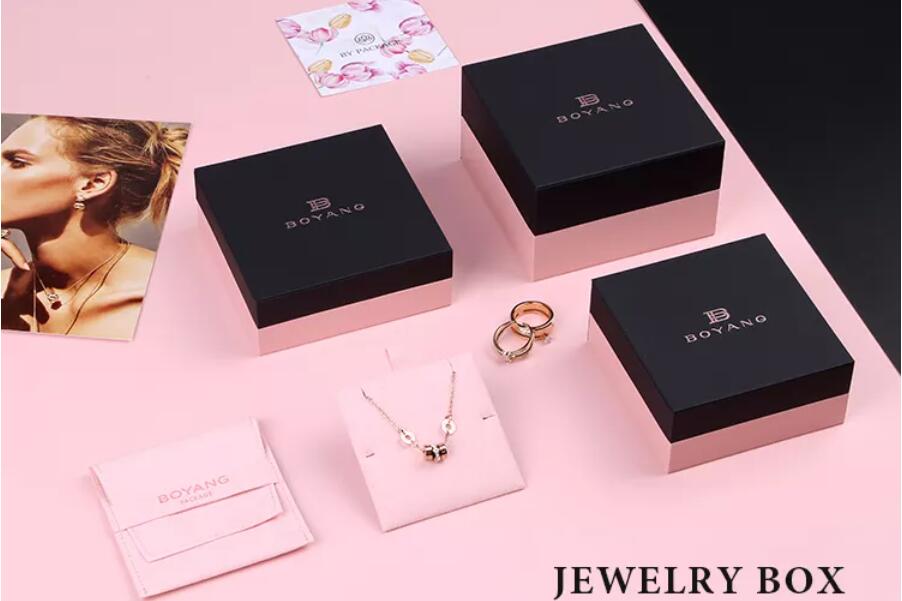
Rings are small, and their surfaces are easily worn. The core of the packaging is to "secure the ring and highlight its texture." Flip-top ring boxes are the optimal choice and one of the most commonly used categories in ring packaging customization. It is recommended to use small flip-top boxes with a thickness of 3-5cm. The material can be cardboard, leather, or wood, depending on the budget. Customized jewelry packaging design and brand logo printing enhance brand recognition. The internal structure needs to be paired with a dedicated ring holder. Metal ring holders are suitable for displaying diamond rings and gemstone rings, securing the ring firmly and highlighting its luster; flocked ring holders are soft and skin-friendly, suitable for silver rings and plain bands, preventing scratches on the ring surface. In addition, small storage compartments can be reserved inside the box to hold the ring certificate, enhancing professionalism while balancing practicality and personalization.
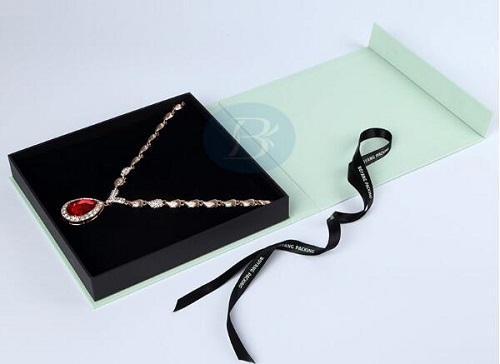
The core pain points of necklaces are easy tangling during storage and transportation, and easy oxidation of the chain. Therefore, a dedicated necklace jewelry box needs to address these two issues. A top-and-bottom lid hanging jewelry box is the best fit. The box shape should be a rectangular top-and-bottom lid box, with the length adjusted according to the necklace chain length (usually 4-8cm). The lid can be designed with a transparent window for easy and intuitive display of the necklace style. The internal structure should include hanging hooks and storage slots. The hooks secure the necklace pendant, and the slots store excess chain, completely preventing tangling. The lining should be made of anti-oxidation flocking or silk, which protects the chain from scratches and slows down oxidation. For customized jewelry packaging, the brand logo can be engraved on the lid, or a personalized greeting card can be added inside the box to enhance the brand's sense of occasion.
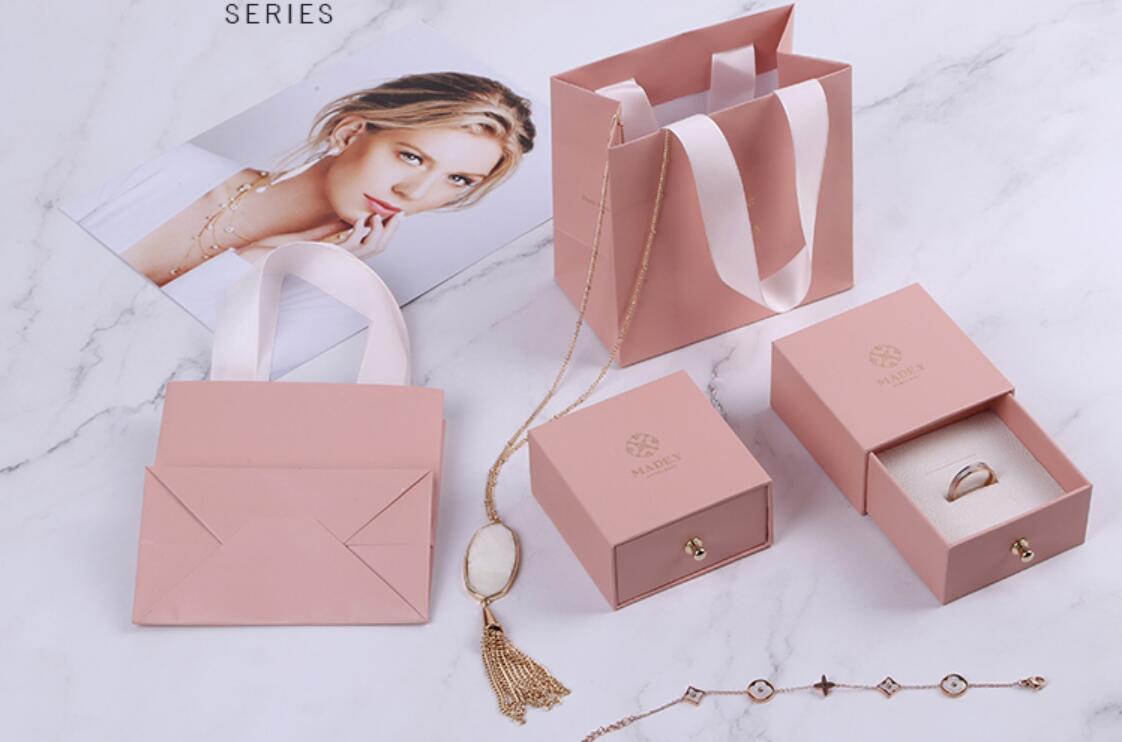
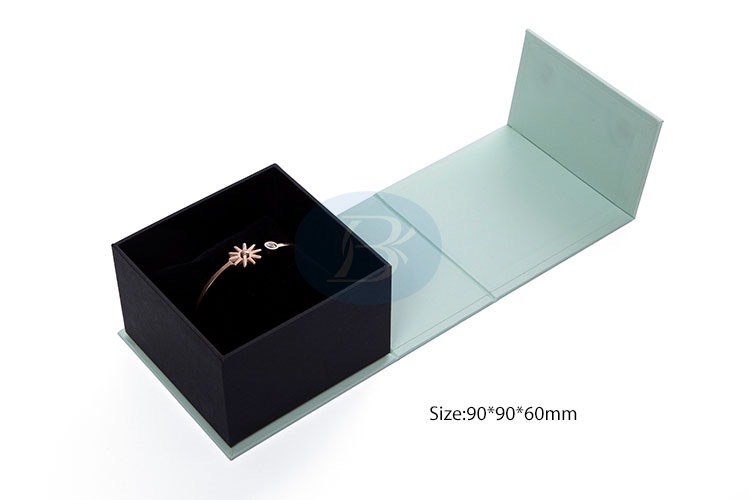
Bracelets and bangles vary greatly in size (thin bracelets, wide bangles), and are mostly round or oval. The core of the packaging is "fitting the shape and preventing deformation." Drawer-style tiered jewelry boxes are the most suitable and are also a popular choice for dedicated bracelet jewelry boxes and multi-functional jewelry packaging boxes. Medium-sized drawer boxes are recommended, with a single drawer height controlled at 5-7cm. Multiple drawers can be designed to accommodate both storage and display, suitable for bulk storage or a store display. The internal structure needs to be adjusted according to the bracelet type: thin bracelets can be fitted with small round grooves to prevent slippage; wide bangles can use adjustable velvet straps to fit the bracelet size and prevent deformation from squeezing; for precious jade and silver bracelets, soft cushioning pads can be added inside the box to enhance protection. Customized jewelry packaging design can be used, with the category name marked on the drawer surface to improve ease of use and enhance exposure of relevant long-tail keywords.
The key to choosing jewelry packaging boxes is "category matching." Rings should be placed in flip-top ring boxes, necklaces in hinged-top boxes, and bracelets in drawer-style boxes. Combined with meticulous internal design, this ensures both the protection of the jewelry and highlights the product's quality. For jewelry industry professionals, leveraging the personalized advantages of customized jewelry packaging and integrating brand concepts into the packaging design can further expand brand exposure and seize market opportunities.