20 years jewelry packaging manufacturer,
Serving 1000+brands,Passed ISO9001/BV/SGS


You can share
- Share to Facebook
- Share to Google+
- Subscribe to our
- Share to Linkedin
- Share to Twitter
You can share

Driven by both consumption upgrades and heightened environmental awareness, eco-friendly jewelry packaging is becoming a new battleground in the jewelry industry. More and more international brands are integrating sustainability into their entire product lifecycle, and as the first point of contact between a brand and consumers, the sustainable design of customized jewelry boxes directly impacts brand image, becoming a key lever for securing international orders.
Many countries worldwide have implemented plastic bans and packaging recycling policies, with the EU imposing stringent environmental standards on imported goods packaging. From the consumer perspective, 73% of consumers are willing to pay a premium for eco-friendly packaging, especially high-end jewelry consumers who tend to choose brands with social responsibility.
Traditional jewelry boxes often use materials such as wood, plastic, and non-biodegradable linings, resulting in high production costs and difficulties in recycling, as well as environmental pollution. Recyclable jewelry boxes, through material innovation and process optimization, can meet the personalized needs of brands customizing jewelry boxes while achieving a green closed loop throughout the packaging's entire lifecycle, becoming a core competitive advantage for brands to overcome international trade barriers and seize market share.
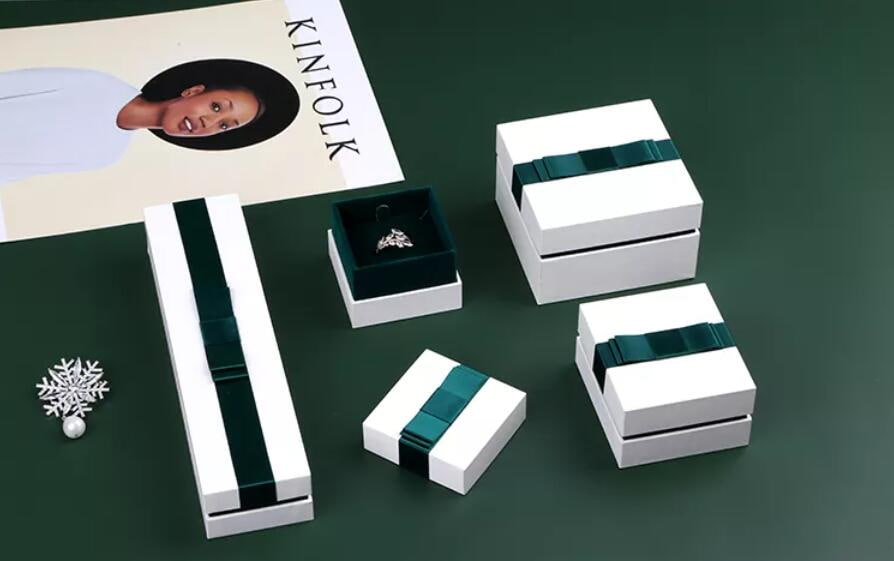
(1) The core of environmentally friendly jewelry packaging is the sustainability of raw materials, with FSC-certified paper being the preferred choice. This type of paper comes from sustainably managed forests, with logging strictly controlled within ecological restoration limits, eliminating deforestation at its source.
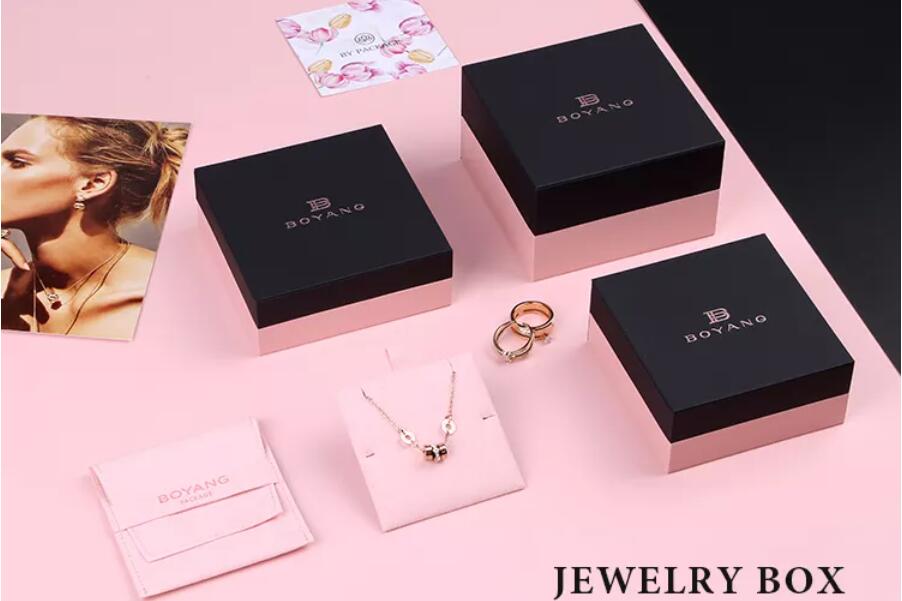
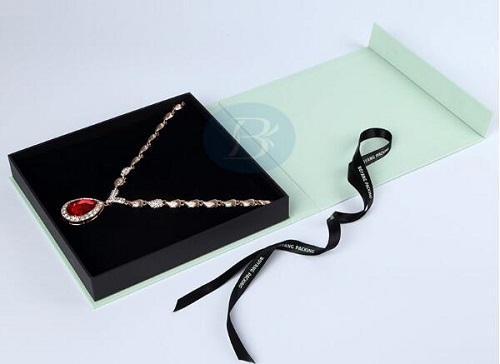
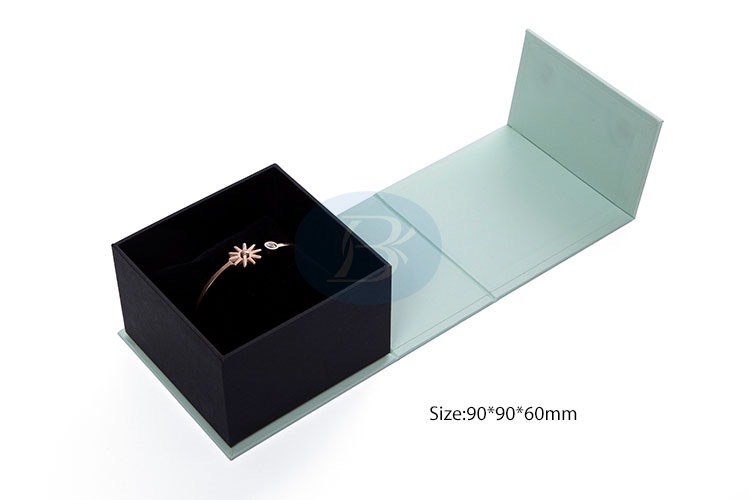
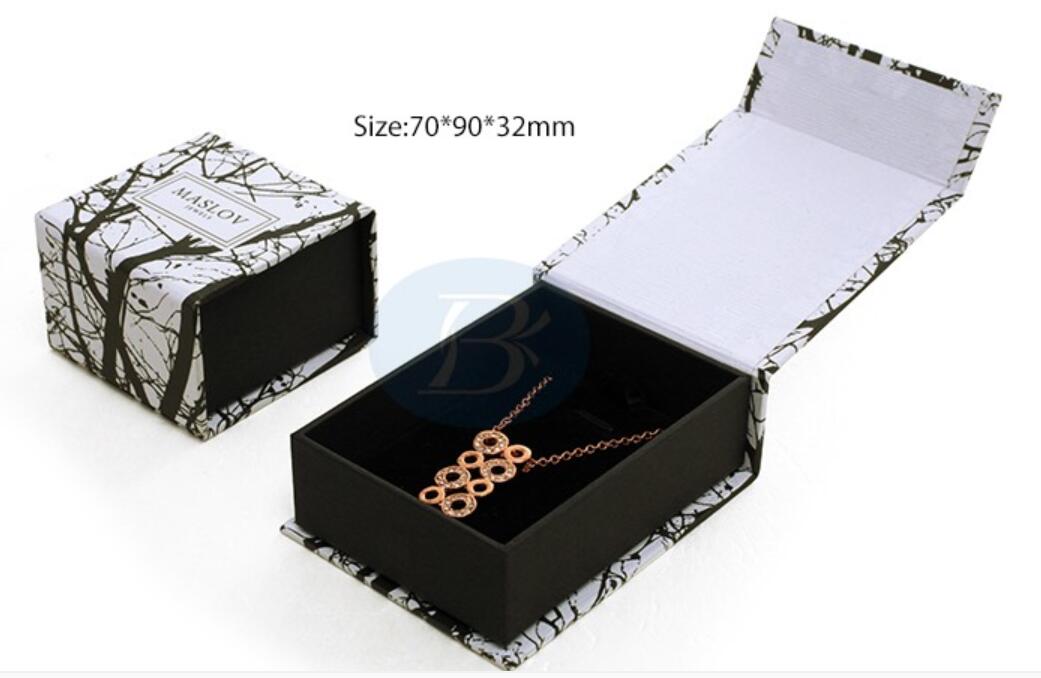
Compared to ordinary paper, FSC-certified paper has denser fibers and a thicker, more robust texture. After embossing and hot stamping, it can simulate wood grain and leather feel, completely replacing traditional solid wood boxes. When used for customized jewelry boxes, it can be used to imprint brand logos and exclusive patterns, and also to display the FSC certification mark, strengthening the brand's environmental image and enhancing international customer trust.
(2) Soybean Ink Printing: Say Goodbye to Pollution and Achieve Full Packaging Recyclability
Traditional printing inks contain heavy metals and volatile organic compounds, which not only harm workers' health but also pollute recycled paper, making packaging unusable. Soybean ink, made from soybean oil, is non-toxic, odorless, and biodegradable. It produces vibrant, saturated colors with strong adhesion, perfectly meeting the high-definition patterns and fine text printing requirements of customized jewelry boxes.
Environmentally friendly jewelry packaging using soybean ink can be directly crushed and recycled after disposal. The paper and ink separate naturally, preventing secondary pollution and achieving a truly zero-burden closed loop of "printing-use-recycling."
(3) Biodegradable Materials: Upgraded Lining, Comprehensive Implementation of Sustainable Design
The lining of a jewelry box is crucial for protecting jewelry. Traditional linings are often made of sponge or plastic foam, which are difficult to degrade. Sustainable design solutions utilize corn starch-based biodegradable materials and biodegradable non-woven fabrics.
These materials are soft to the touch, have excellent cushioning properties, and firmly secure the jewelry, preventing damage during transportation. After disposal, they completely degrade into carbon dioxide and water in soil within 3-6 months, leaving no harmful residues. Paired with FSC-certified paper boxes, this creates a fully environmentally friendly customized jewelry box from the outside in, ensuring the brand's sustainable philosophy is implemented in every detail. Recyclable jewelry boxes usher in a new cycle of green growth for brands. Eco-friendly jewelry packaging is not a cost burden, but a long-term investment for brands. By combining FSC-certified paper, soy ink, and biodegradable materials, brands can create customized jewelry boxes that are both high-quality and environmentally friendly, meeting international policy standards while precisely targeting environmentally conscious consumers.