20 years jewelry packaging manufacturer,
Serving 1000+brands,Passed ISO9001/BV/SGS


You can share
- Share to Facebook
- Share to Google+
- Subscribe to our
- Share to Linkedin
- Share to Twitter
You can share

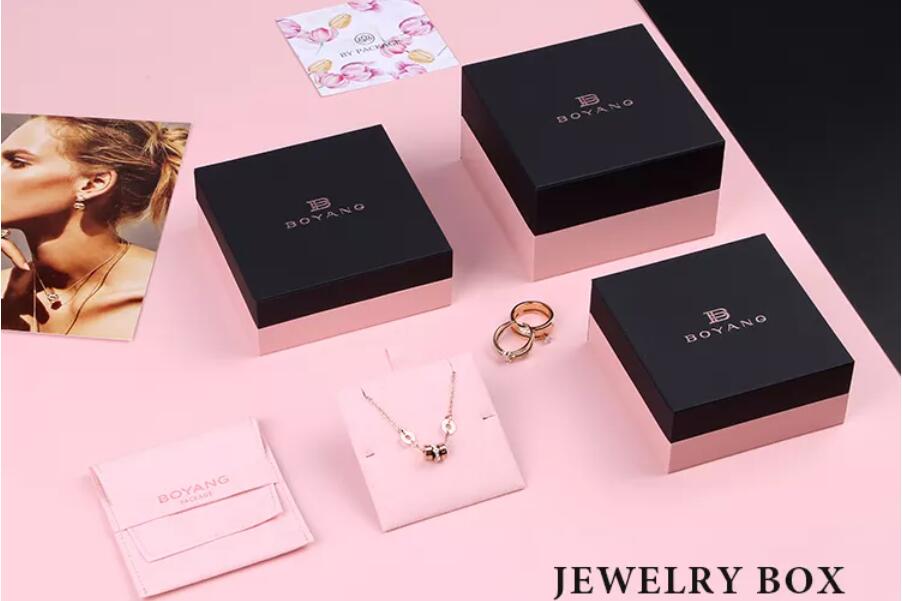
When consumers first lay eyes on a jewelry counter—beholding packaging with a delicate texture and crisp, sharp edges—they are often captivated by the sense of luxury it exudes. Yet, to the untrained eye, it might appear to be nothing more than a "container made of glued-together cardboard." The reality, however, is quite different.
Crafting a custom jewelry box—one capable of perfectly showcasing the brilliance of the jewelry within while adding significant premium value to the brand—involves an incredibly rigorous industrial manufacturing process. From initial blueprints to the final physical product, a high-quality paper jewelry box typically undergoes anywhere from a dozen to several dozen distinct stages of production. Today, we invite you to join us as we take a deep dive into this "journey of paper's magnificent transformation."
Before the machinery begins to hum, the most critical work actually takes place within the "brain"—the conceptual and analytical phase. This stage determines the very DNA of the box.
(1) Structural Design & Engineering Drafting
Everything begins with the designer's inspiration. Packaging engineers must translate the aesthetic design sketches into precise, millimeter-accurate 2D layout diagrams (known as die-line templates). They design specific opening mechanisms tailored to different types of jewelry (such as rings, necklaces, or bracelets)—including styles like lift-off lids, drawer-style sliders, or hinged flip-tops—and meticulously calculate the folding tolerances necessitated by the thickness of the cardboard substrate.
(2) Material Selection & Color Testing
The very soul of a paper jewelry box lies in its choice of materials. Guided by the brand's specific aesthetic and tone, engineers scour global libraries of specialty papers to identify the perfect outer wrapping paper—ranging from soft-touch textures and leather-effect finishes to pearlescent stocks—and pair it with high-density greyboard to serve as the box's structural skeleton. This is followed by rigorous prototyping and testing to ensure that the selected materials align perfectly with the core design concept.
Once the blueprints are officially approved, the raw materials enter the workshop to undergo a transformative process—a fusion of modern printing technology and traditional craftsmanship.
(3) High-Precision Printing
If the outer wrapping paper requires specific graphic patterns or brand-exclusive colors, it is sent to the printing press. For luxury-grade custom jewelry boxes, "spot color" printing (such as the Pantone system) is typically employed. This ensures that the color palette remains absolutely consistent across every single production batch worldwide—leaving absolutely no room for the dreaded "colorful black" (a printing error where black appears muddy or inconsistent).
(4) Surface Finishing
This is the secret to making paper jewelry boxes look "expensive."
Lamination:
Applying a layer of soft-touch film or scratch-resistant matte film to the paper surface to enhance tactile appeal and protect the printed area.
Hot Stamping (Gold/Silver):
Applying metallic foil to the logo area using high heat and pressure to convey a sense of luxury and prestige.
Embossing/Debossing:
Using a mold to press a three-dimensional relief effect into the paper adds visual depth and texture.
Spot UV:
Applying a transparent, glossy coating to specific design elements to create a striking contrast between glossy and matte finishes.
(5) Die-cutting and Waste Stripping
The full sheets of surface paper—having undergone their surface treatments—are fed into a die-cutting machine. Sharp cutting dies precisely cut the paper into the specific flat pattern outlined in the engineering drawings, while simultaneously scoring the fold lines. Subsequently, workers manually strip away the excess waste paper from the edges.
(6) Greyboard V-Grooving
This is an indispensable step for high-end rigid gift boxes. To ensure that the box corners form a true "perfect 90-degree angle" once assembled (a finish known in the industry as a "clean corner"), V-shaped grooves must be cut into the thick greyboard frame. Boxes without grooving tend to have soft, rounded edges, whereas grooved boxes feature sharp, crisp edges that possess a distinct geometric elegance.

In this final stage, the true test lies in the skill and patience of the assembly line workers.
(7) Paper Mounting and Manual Wrapping
In this phase, the flat sheets of paper finally transform into a three-dimensional box. Workers (or semi-automated robotic arms) apply an eco-friendly adhesive evenly to the back of the surface paper, then precisely wrap it around the pre-formed greyboard frame. The folding and sealing of the edges must be executed with absolute precision—fitting together seamlessly without any air bubbles or visible glue seepage. For many top-tier brands, this step in the production of custom jewelry boxes remains entirely dependent on the skilled manual craftsmanship of experienced workers to this day.
(8) Insert Die-cutting and Assembly
While the exterior of the box is exquisite, the interior must be treated with equal care and attention to detail. Interior liners (such as high-density foam, flocked fabric, or microfiber cloth) must undergo a separate die-cutting and molding process before being fitted into the box. A high-quality liner not only securely holds the jewelry in place but also undergoes anti-oxidation treatment to preserve the jewelry's luster.
(9) Rigorous Quality Control, Dust Removal, and Odor Elimination (QC & Packaging)
Finally, every finished product must pass under the discerning gaze of our quality control inspectors. They check for scratches, color variations, and glue residue, while also testing the smoothness of the box's opening and closing mechanisms (such as the pull-action of a drawer box or the magnetic force of a magnetic-closure box). Only after passing inspection—and undergoing dust removal and ventilation to eliminate any residual odors—are the approved products packed into outer cartons and shipped to jewelry counters around the globe.
As demonstrated by the breakdown above, a humble paper jewelry box is, in reality, the culmination of materials science, structural engineering, and aesthetic design. For professionals in the jewelry packaging industry, maintaining reverence for every single step of the process is the only way to create truly moving and captivating works.
Q1: Approximately how long is the production lead time for a standard custom paper jewelry box?
Typically, the lead time for mass production is around 15 to 25 days. The initial sampling and approval stage usually takes 5 to 7 days. If the design involves complex V-grooving, multiple hot-stamping applications, or purely manual paper-wrapping techniques, the delivery timeline may be extended accordingly.
Q2: Why is the final assembly stage for many high-end paper jewelry boxes still performed entirely by hand?
This is because high-end jewelry boxes often feature complex, irregular shapes, intricate corner folds, or specialized liner inlays. Current automated machinery struggles to handle these extremely tight tolerances and complex finishing details with the same level of precision and flawlessness—specifically the crisp, sharp corners and the complete absence of glue overflow—that can be achieved by skilled human artisans.
Q3: Is paper packaging susceptible to moisture and deformation? What measures are taken during the production process to address this?
While ordinary paper is indeed vulnerable to moisture, the manufacturing processes for high-end custom jewelry boxes incorporate specific countermeasures. Factories typically apply a protective lamination film to the outer wrapping paper or utilize specialized "leather-grain" papers that possess inherent moisture-resistant properties. Additionally, the internal structural framework is constructed using high-density greyboard with its moisture content strictly controlled at an extremely low level. Furthermore, desiccant packets are included during the packaging process; this dual-pronged approach effectively resolves any issues related to moisture absorption.
Q4: Does the addition of hot stamping and embossing processes significantly increase the cost of custom jewelry boxes?
This depends primarily on the order quantity. Both hot stamping and embossing require the separate production of metal plates (molds), which incurs a fixed setup fee. If you place a large order, the cost of this plate fee—when amortized across each individual box—becomes negligible; however, for very small orders consisting of only a few dozen units, the cost contribution of these specific finishing processes will appear relatively high on a per-unit basis.
Q5: Which specific manufacturing stage determines that slow, "dampened" sensation felt when opening and closing a high-end jewelry box?
This premium, dampened feel is not a matter of chance; rather, it is precisely calculated during the "structural design" and "die-cutting plate creation" stages. Engineers must calculate the friction coefficient between the inner and outer components of the box (such as a lift-off lid or a drawer mechanism). They factor in variables—including the thickness of the cardboard, the adhesive layer, and even the air displacement space—within their tolerance parameters. Through an iterative process of prototyping and fine-tuning the dimensions of the cutting dies, they ultimately achieve that distinct tactile sensation—smooth yet offering just the right amount of resistance.