20 years jewelry packaging manufacturer,
Serving 1000+brands,Passed ISO9001/BV/SGS


You can share
- Share to Facebook
- Share to Google+
- Subscribe to our
- Share to Linkedin
- Share to Twitter
You can share

The soul of packaging often lies hidden within its unseen skeletal framework. A superior jewelry box structure not only dictates the sense of wonder and interactive experience a consumer feels upon unboxing, but also directly impacts a brand's packaging costs, production lead times, and logistics efficiency. In 2026, as eco-conscious philosophies and minimalist aesthetics become deeply intertwined, brands are increasingly prioritizing structural "ingenuity" during the prototyping phase, rather than relying solely on the lavish accumulation of materials.
Today, we will conduct an in-depth analysis of the three most cost-effective and market-popular mainstream jewelry box structures currently available: the Drawer Box, the Lid-and-Base Box, and the Flip-Top Box. We will provide you with a professional guide to key prototyping parameters and offer practical tips on how to avoid common pitfalls.
(1) Structural Advantages and Cost Considerations
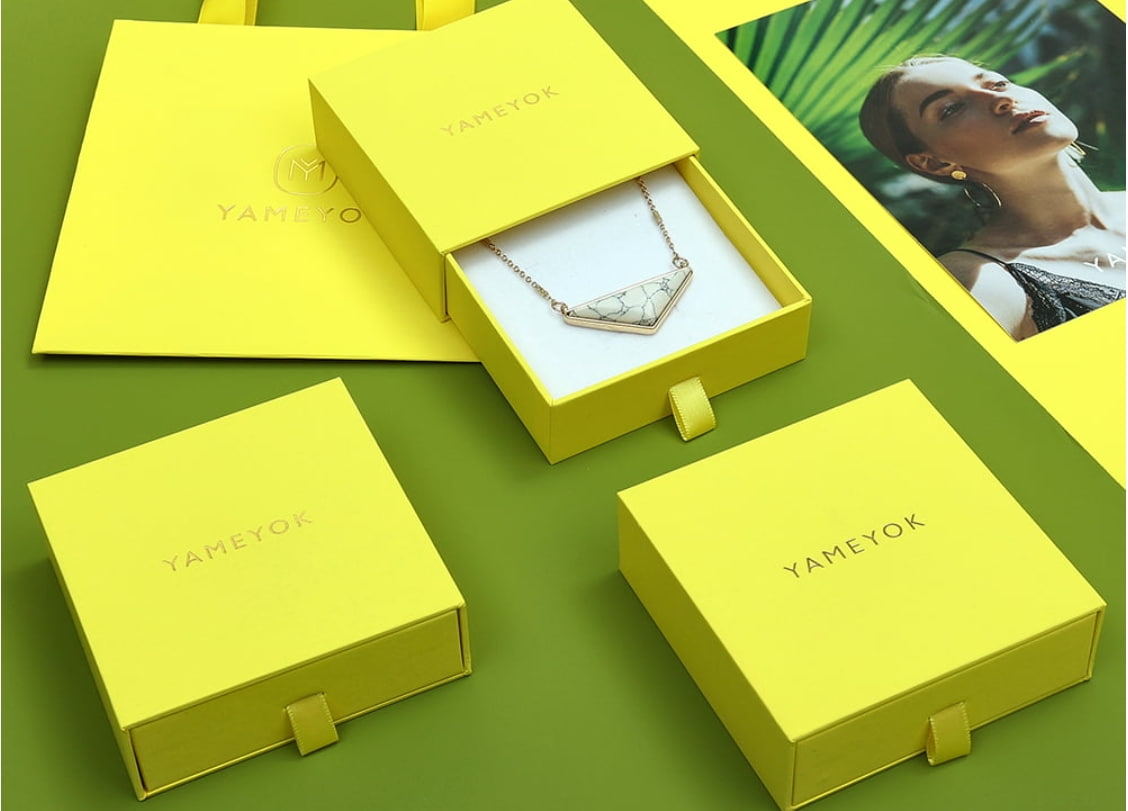
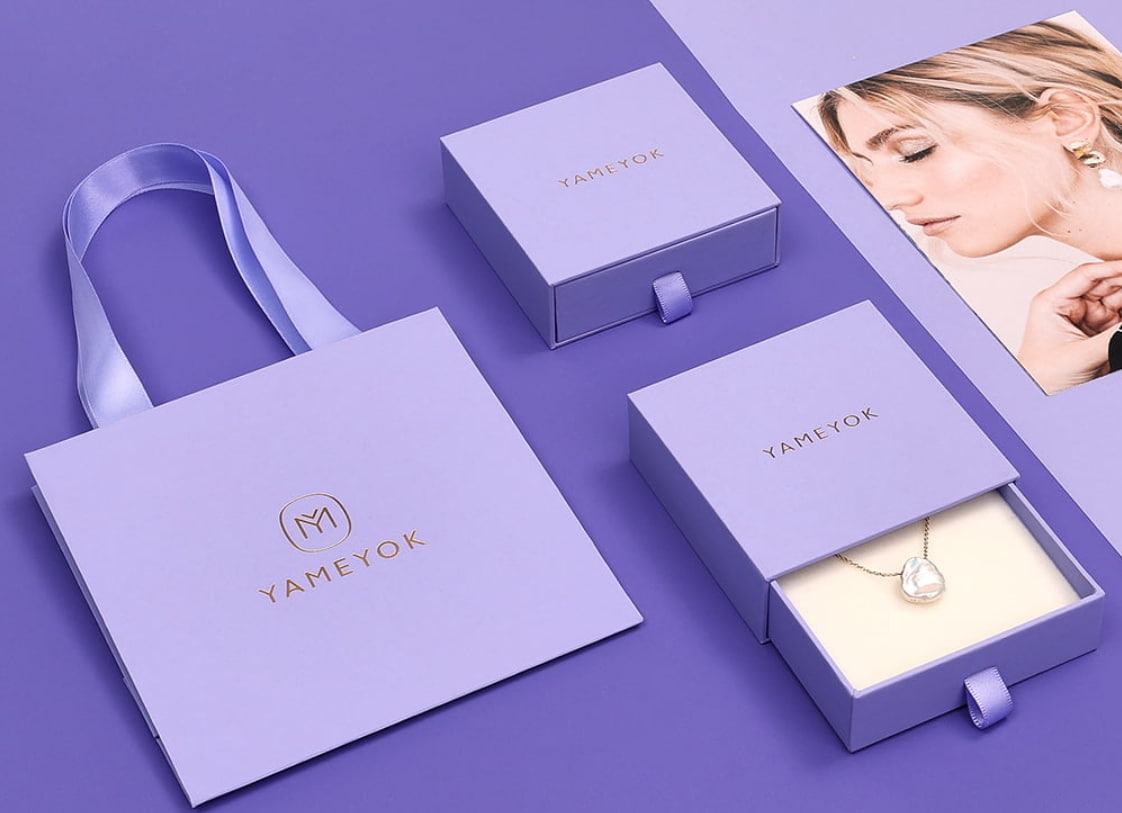
This structure is ideally suited for use as an everyday jewelry storage organizer, significantly enhancing the packaging's potential for secondary use. From a cost perspective, drawer boxes generate relatively low material waste; furthermore, the inner and outer components can be constructed using cardboard of different weights—allowing for effective budget control while simultaneously ensuring structural rigidity.
(2) Key Prototyping Parameter Recommendations
Tolerance and Smoothness: The success of a drawer box hinges entirely on that pivotal moment of extraction. The clearance (tolerance) between the inner and outer boxes typically requires precise control, ideally falling within a range of 1 to 1.5 millimeters. If the fit is too tight, consumers may be forced to pull with excessive force, potentially damaging the box; conversely, if it is too loose, the packaging will appear cheap and flimsy. During the prototyping phase, it is imperative to require the manufacturer to conduct a "smoothness test" by loading the inner drawer with an object equivalent in weight to the actual jewelry.
Pull-Tab Design: The tactile quality of the ribbon pull-tab directly influences the overall perceived luxury of the packaging. We recommend selecting high-density grosgrain or satin ribbons. Regarding the fastening method, it is best to utilize a "concealed, embedded perforation" technique rather than simple surface adhesion to prevent the ribbon from detaching under tension.

Comprising two distinct parts—a lid and a base—the Top-and-Bottom box is the oldest and most widely utilized structure for jewelry packaging. Not only does it boast exceptional production efficiency, but it is also remarkably sturdy, making it an excellent choice for cost control and ensuring logistical security.
(1) Structural Advantages and Cost Considerations
Due to its inherent simplicity, the Top-and-Bottom box facilitates the fastest processing speeds during the die-cutting and forming stages. Its high compatibility with automated machinery typically results in the lowest unit costs for mass production runs. To transcend the perceived ordinariness of traditional designs, the prevailing trend for 2026 favors an upgraded version featuring a "Shoulder" (or "Neck")—a raised rim that lends the box a crisper profile and a greater sense of structural depth.
(2) Key Prototyping Parameters
Premium Damping Effect: In top-tier Top-and-Bottom boxes, the lid does not simply drop open; instead, it descends slowly and smoothly—at a uniform pace—cushioned by the controlled displacement of air. Achieving this effect requires maintaining a dimensional tolerance between the lid and base of no more than 0.5 millimeters. During the prototyping phase, it is essential to comprehensively account for the thickness of the outer wrapping paper—and even the minute additional thickness created by the adhesive once cured—while repeatedly fine-tuning the dimensions of the cutting die.
Contrasting Shoulder Design: When utilizing a structure with a raised shoulder, the exposed height of the rim is typically set between 3 and 5 millimeters. It is recommended to apply a secondary brand color to this exposed section—one that contrasts with the exterior of the box—to enhance visual layering and depth.
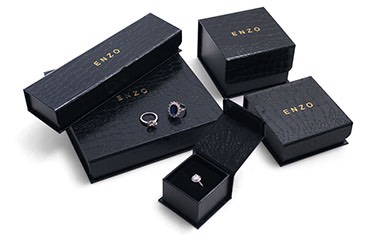
This type of jewelry box features a single, integrated structure that typically opens in a manner resembling a book (often referred to as a "Book-Style Box"), with hidden magnets embedded within the front edge. The crisp, distinct "click" sound produced when the box is opened has become a standard signature feature for numerous high-end jewelry and wedding ring brands.
(1) Structural Advantages and Cost Considerations
Magnetic Clamshell boxes offer a large display surface, making them ideally suited for interior liners featuring three-dimensional flocking or angled foam inserts; this configuration maximizes the visual brilliance of the jewelry presented to the consumer. Although the inclusion of magnetic components and the intricate craftsmanship required for wrapping the outer shell result in relatively higher production costs, the unparalleled sense of "premium value" and luxury appeal they convey make the investment well worth it.
(2) Key Recommendations for Prototyping Parameters
Hinge Durability: The back-fold section connecting the lid to the base is the critical stress point. During prototyping, it is essential to verify that this joint utilizes highly resilient specialty paper or incorporates an embedded tear-resistant fiber mesh. This ensures that the paper remains free of cracks or creases, even after being opened and closed hundreds of times by the consumer.
Magnetic Force Balance: The size of the magnets must be precisely calculated based on the thickness of the cardboard and the overall weight of the box. If the magnetic attraction is too strong, consumers may struggle to open the box with one hand—potentially even tearing the outer wrapping paper. Conversely, if the attraction is too weak, the box will fail to close securely, diminishing its premium appeal. During prototyping, it is recommended to request that the manufacturer use high-strength Neodymium-Iron-Boron (NdFeB) magnets and to physically test the tactile sensation of the closing mechanism.
Regardless of which structural design you ultimately choose, a flawless packaging solution always begins with a rigorous prototyping process. By precisely controlling these technical parameters, your packaging design can truly become a powerful tool for enhancing your brand's value.
Q1: Among these three jewelry box structures, which is the most resistant to crushing damage during long-distance shipping for e-commerce?
The Lid-and-Base (Two-Piece) structure is the most robust. Because the double layers of greyboard—from both the lid and the base—overlap when the box is closed, it offers superior compressive strength on all sides, making it highly resilient against the rough handling often associated with logistics sorting.
Q2: If my brand aims to pursue a strictly eco-friendly and biodegradable path, which structure should I prioritize?
We recommend prioritizing either the Lid-and-Base structure (without magnets) or the Drawer-style structure. Flip-top boxes typically require the embedding of metal magnets, which complicates the subsequent recycling and sorting process. A purely paper-based Lid-and-Base box not only minimizes material usage but can also be directly integrated into standard paper recycling systems with 100% efficiency.
Q3: After a period of use, the inner tray of a Drawer-style jewelry box often becomes soft and deformed. How can this be resolved?
This issue typically arises because the structural material used for the inner tray is insufficiently rigid. During prototyping, you should request that the manufacturer upgrade the inner tray's material from standard white cardstock to a high-density greyboard with a heavier weight (e.g., 1200g or higher). Additionally, utilizing a "V-groove" cutting technique for the corners will not only prevent deformation but also ensure the box retains a sharp, crisp, and three-dimensional aesthetic.
Q4: Will the hidden magnets inside a flip-top box lose their magnetism over time, preventing the box from closing properly?
If the factory uses inexpensive, standard black magnets, there is indeed a risk that their magnetic strength will diminish. Professional packaging prototyping services, however, specifically require the use of "NdFeB strong magnets." This material is not only compact—making it easy to conceal—but also retains its magnetic force over the long term; under normal usage conditions, it will not lose its magnetism even after several years.
Q5: If I want to incorporate irregular, custom shapes into these classic structural designs, will the die-cutting mold costs be very high?
The cost of die-cutting molds for standard rectangular or square structures is quite low. However, if your design involves polygons, circles, or complex cut-out windows, not only will the mold costs double, but the subsequent manual assembly costs and reject rates will also rise significantly. We recommend that startup brands initially focus on achieving design breakthroughs through graphic visual design applied to classic structural formats.