20 years jewelry packaging manufacturer,
Serving 1000+brands,Passed ISO9001/BV/SGS

You can share
- Share to Facebook
- Share to Google+
- Subscribe to our
- Share to Linkedin
- Share to Twitter
You can share

Within the consumer landscape of 2026, "Silent Marketing" is emerging as the new norm in the jewelry industry. In the precise moment a customer receives a product—without a salesperson present to provide commentary—custom jewelry packaging becomes the brand's sole ambassador. The following six cutting-edge custom jewelry packaging concepts are designed to help your jewelry brand utterly captivate consumers the instant they unbox their purchase.
In the past, eco-friendly packaging often conjured images of coarse kraft paper and rustic textures—qualities that stood in stark contrast to the sophisticated ethos of fine jewelry. However, in 2026, "Zero-Carbon Aesthetics" has evolved into a form that exudes sheer luxury.
(1) "Guilt-Free" Unboxing: Younger generations of consumers—particularly high-net-worth individuals—harbor a strong aversion to excessive packaging. By adopting innovative interior inserts molded from mushroom mycelium or bamboo fibers, brands can achieve a surface finish as velvety-smooth as suede. These inserts not only offer superior shock absorption during transit but also allow consumers to dispose of the packaging without any lingering sense of guilt.
(2) The Continuation of Botanical Life: Incorporate "Seed Paper"—embedded with real flower or herb seeds—into packaging sleeves or information cards. After removing their necklace, consumers simply need to bury the paper in soil and water it; a few weeks later, delicate baby's breath or daisies will begin to sprout. This transformative process—turning "inanimate packaging" into "living flora"—is not only deeply romantic but is also poised to generate a massive wave of organic social media buzz on platforms like Xiaohongshu.
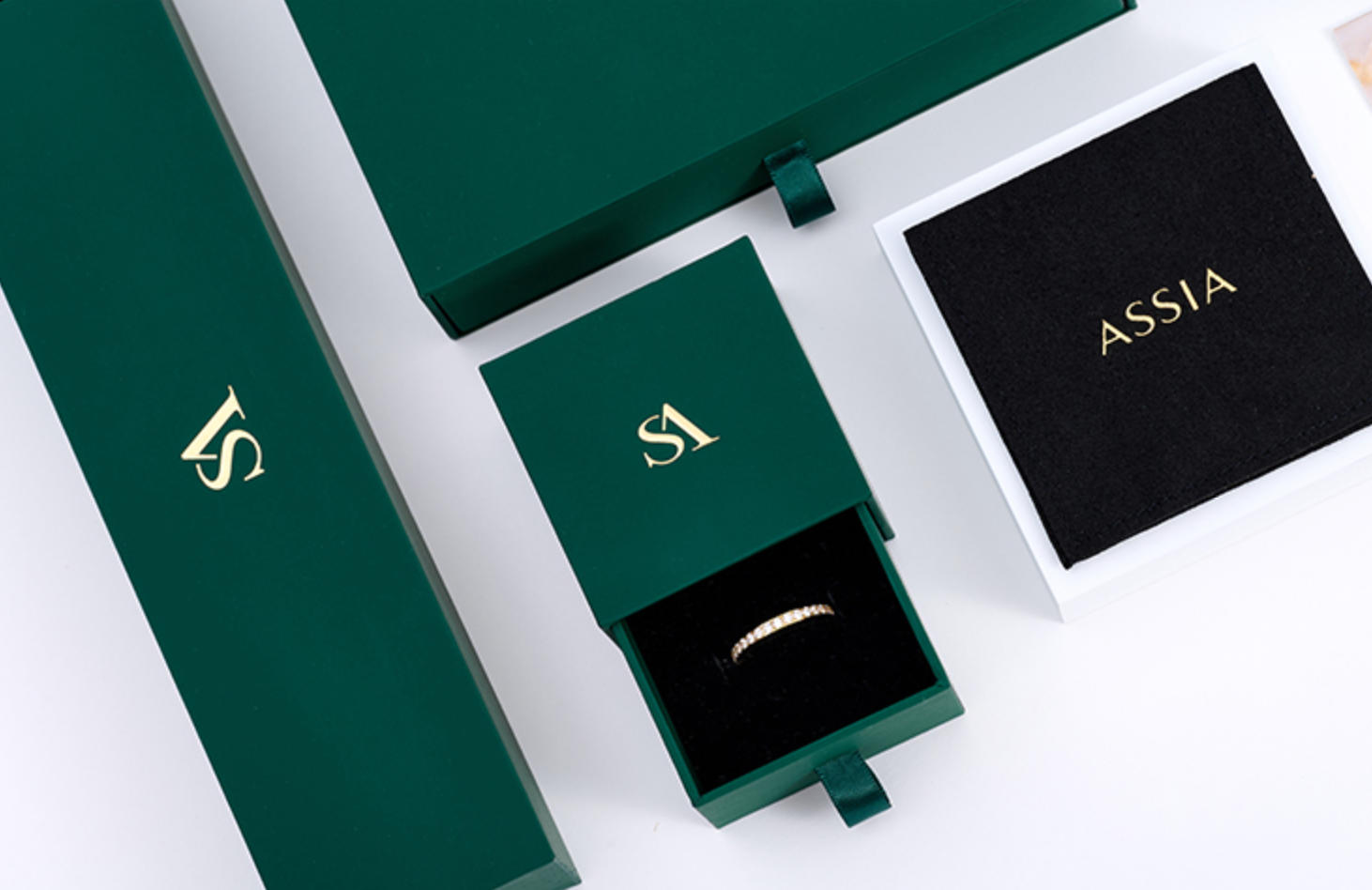
Do not let the unboxing process be reduced to a mere "lifting of the lid." A truly world-class unboxing experience is a miniature cinematic production—lasting just 5 to 10 seconds—meticulously directed by the brand, wherein every single step is carefully calculated to guide and shape the consumer's emotional journey.
(1) Origami Architecture and Focal Point Design: This involves incorporating complex structural engineering—such as multi-layered petal-like unfolding mechanisms, rotating lift-up platforms, or "puzzle boxes" that require pulling a specific ribbon to unlock. As the box slowly unfolds in response to the user's movements, the central piece of jewelry is illuminated by lighting (or natural light) like a protagonist on a stage; this sense of layered, unfolding anticipation can amplify the product's stunning impact manifold.
(2) ASMR-Inspired Auditory Design: While visual appeal is easily achieved, compelling auditory experiences are far more elusive. Premium packaging is deliberately engineered to create specific sounds during the unboxing process: the crisp *rip* of tearing open an anti-tamper strip; the satisfying, just-right *hiss* of friction as a drawer box slides open; or the solid, reassuring *click* as a magnetic clasp snaps shut. These subtle auditory cues provide neurological feedback that significantly heightens the consumer's perception of "luxury."
The very moment a consumer picks up a package, they are—consciously or subconsciously—using their sense of touch and the object's weight to "gauge" the value of the jewelry contained within.
(1) Anchoring Value Through "Weight": The human subconscious harbors a cognitive bias: "Heavy equals Valuable." Top-tier custom packaging will cleverly embed weighted inserts within the cardboard layers or at the base of the box. When a customer lifts the jewelry box out of its shipping carton, that unexpected sense of substantial *heft* and *gravitas* instantly creates the illusion that a piece of jewelry worth a few thousand dollars is actually worth tens of thousands.
(2) Transcending Materials Through Tactile Illusion: Packaging is no longer confined to traditional leather-grain papers. In 2026, the trend favors the use of ultra-matte tactile papers (with a finish resembling baby-soft skin or premium silk), high-grade Alcantara® microfiber suede, or heavyweight linen fabrics featuring natural textures. When combined with V-groove cutting techniques—executed with a precision of 0.1 millimeters to ensure seamless, razor-sharp corners—the entire box appears as a flawless sculptural work of art, devoid of any cheap-looking creases or visible glue residue.
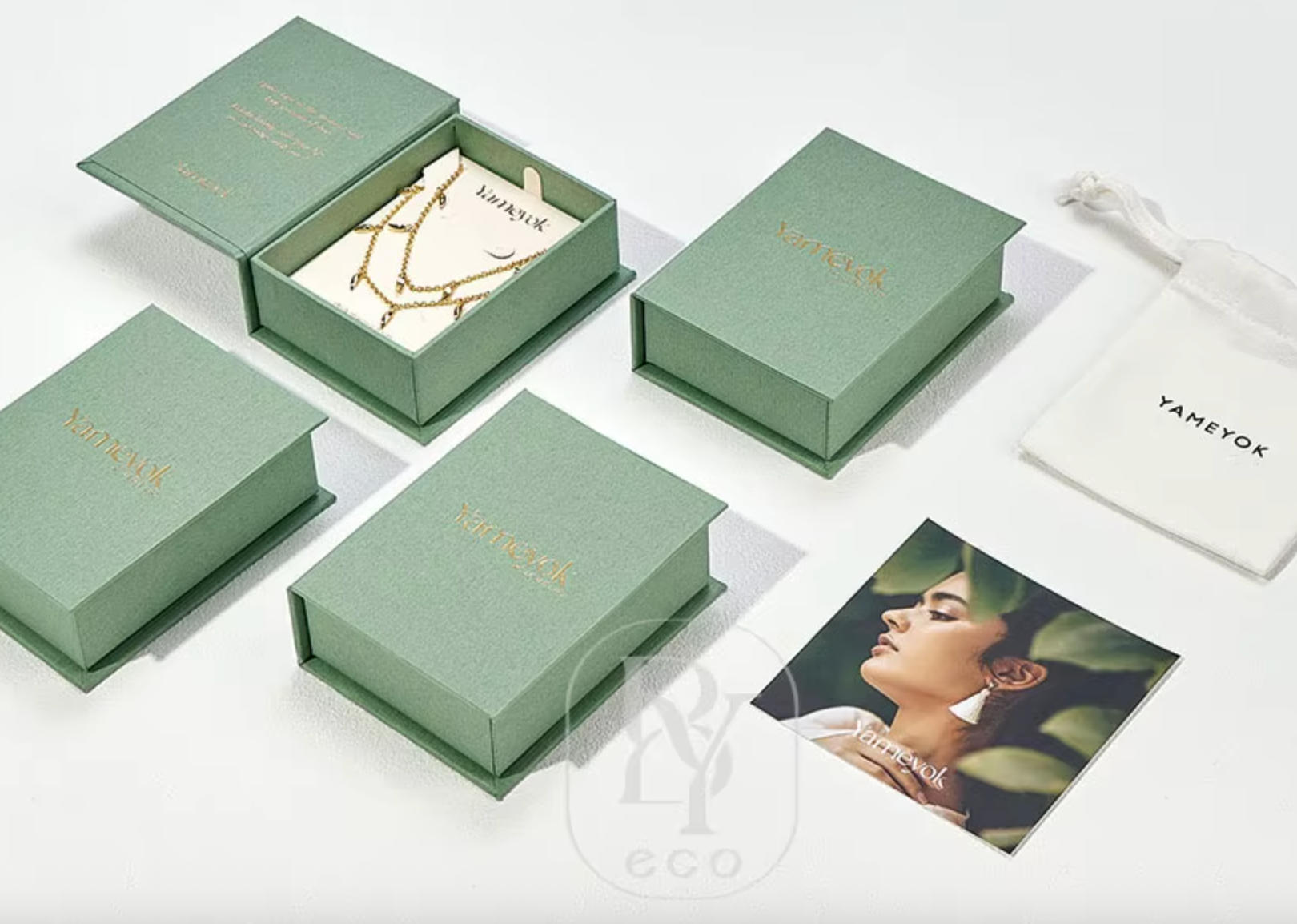
A jewelry box emblazoned with a massive logo—if it serves no purpose other than to hold jewelry for a single moment—is destined to be shoved into the depths of a drawer. Truly astute brands understand how to design packaging that "usurps the throne," securing a permanent place on the customer's vanity.
(1) Modular Travel Organizers: Design the outer packaging to function as an aesthetically pleasing, portable jewelry case. The interior features a detachable lining upholstered in premium flocking treated with a "nano-scale anti-tarnishing coating." This not only provides long-term protection against the oxidation and discoloration of silver and gold jewelry but also makes it a natural choice for customers to take along on business trips or vacations. Every time this organizer is opened in a hotel room, it serves as a powerful reinforcement of the brand's presence in the customer's memory.
(2) Integrating Home Aesthetics: Downplay the commercial nature of the packaging by adopting Morandi color palettes or sophisticated gray tones. Eliminate intrusive, oversized logos—which often overshadow the product itself—in favor of subtle, tone-on-tone debossing techniques. This transforms the box into a minimalist home storage accent piece, allowing it to blend seamlessly into the consumer's living environment.
To facilitate automated manufacturing, 90% of the jewelry boxes currently on the market are either square or rectangular. By breaking away from this convention, you gain a decisive head start right at the starting line.
(1) Biomimicry and Irregular Structures: Align the packaging design with the specific theme of the jewelry collection to create high-impact, irregularly shaped casings. For instance, a pearl collection might feature streamlined packaging that mimics the opening and closing of a seashell; conversely, a natural gemstone collection could utilize irregular polygonal boxes resembling the faceted surfaces of a meteorite. These avant-garde forms possess immense visual magnetism, making them particularly compelling for display in short-form videos and live-streamed presentations.
(2) Fluid Typography and Avant-Garde Visuals: Abandon traditional centered-alignment layouts. Instead, adopt "Fluid Typography"—or asymmetrical text placement—that resonates with the aesthetic sensibilities of Generation Z. Go a step further by incorporating tactile elements such as Braille embossing or localized UV spot-gloss finishes, thereby transforming the packaging itself into a genuine work of Pop Art.
The Chinese supply chain is undergoing a magnificent transformation—shifting from mere "contract manufacturing" to "craftsmanship empowerment." This evolution provides global jewelry brands with an incredibly rich arsenal of creative inspiration.
(1) The Modern Expression of Intangible Cultural Heritage: By partnering with Chinese "intelligent manufacturing" facilities that possess deep R&D capabilities, brands can apply traditional *mortise-and-tenon* joinery to modern rigid cardboard assembly. This enables the creation of high-strength, interlocking packaging that requires absolutely no glue throughout the entire process. Alternatively, elements of China’s Intangible Cultural Heritage—such as Suzhou embroidery, bamboo weaving, and traditional lacquerware—can be faithfully reproduced on mass-produced specialty papers at extremely low costs, utilizing modern digital micro-printing and selective hot-stamping techniques.
(2) Rapid, Flexible Response Capabilities: By leveraging the vast packaging industry clusters in China’s Pearl River Delta and Yangtze River Delta regions, brands can achieve "small-batch, rapid-response" production. This allows for the swift prototyping and manufacturing of limited-edition packaging tailored specifically to different holidays (such as Valentine’s Day or Mother’s Day) or distinct regional markets. This unique ability—which seamlessly blends the charm of Eastern tradition with the high-speed responsiveness of modern industrialization—serves as the most solid foundation for bespoke, high-end packaging.
Custom jewelry packaging is no longer merely a cost center; it has become a powerful lever for a brand's long-term growth. When eco-friendliness, aesthetics, functionality, and storytelling converge perfectly within a single box, your jewelry has already secured its future success the very moment it catches a customer's eye.