20 years jewelry packaging manufacturer,
Serving 1000+brands,Passed ISO9001/BV/SGS


You can share
- Share to Facebook
- Share to Google+
- Subscribe to our
- Share to Linkedin
- Share to Twitter
You can share

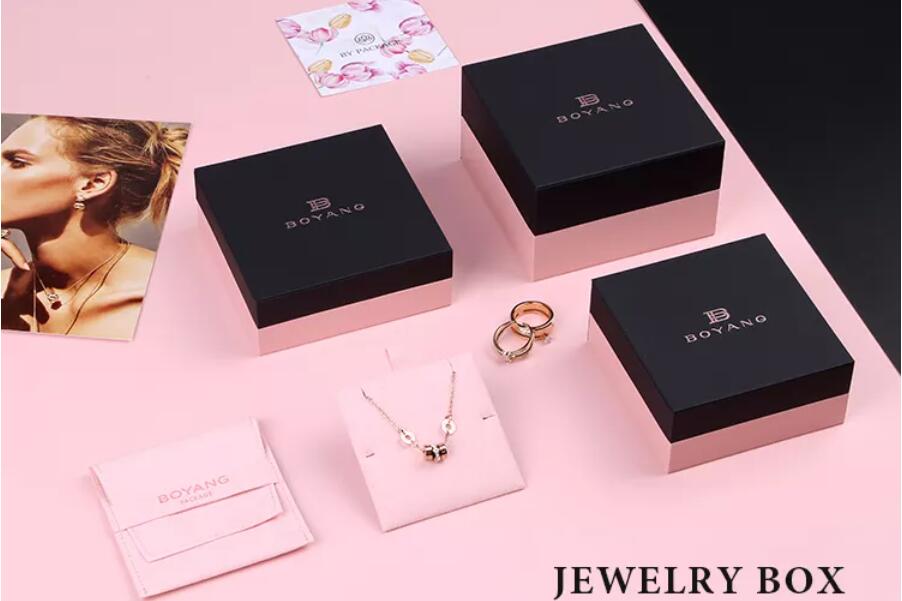
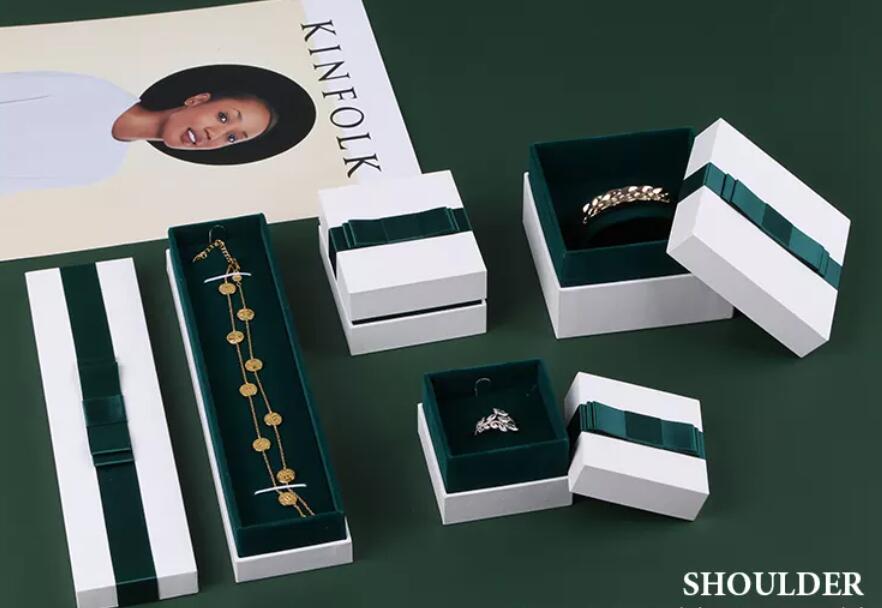
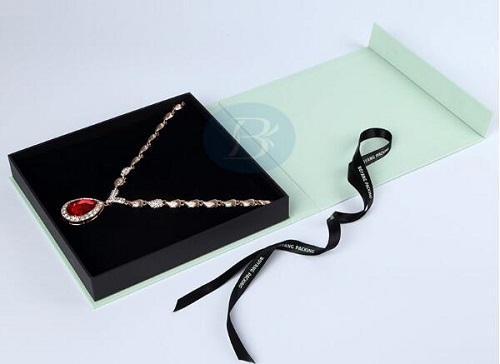
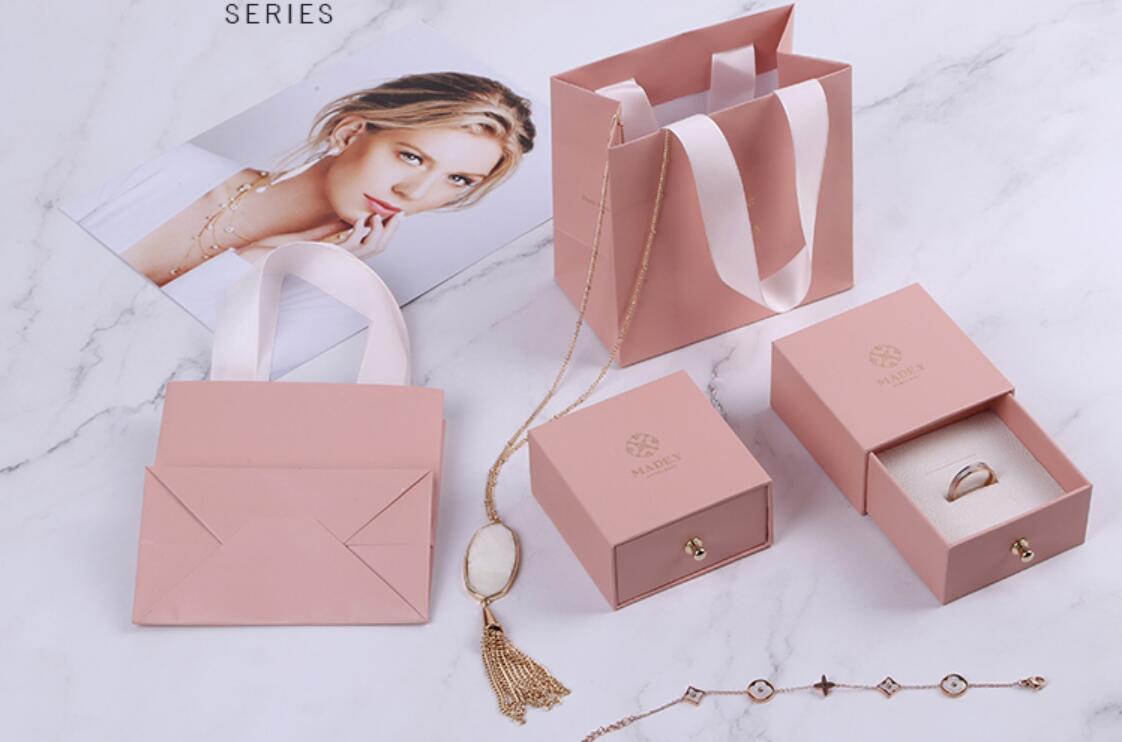
When a piece of high-end jewelry needs a matching case, a custom jewelry box goes from concept to reality. This process is far from a simple "order and production," but rather a systematic project that integrates creativity, craftsmanship, and project management. Understanding the complete development process is crucial for jewelry brands to control quality, budget, and time.
Everything begins with a clear strategy. The brand needs to work with the packaging supplier to confirm core needs: Who is the target audience for the custom jewelry box? Is it for everyday sales, wedding gifts, or limited-edition collections? What is the budget? This stage requires clarifying the role the packaging plays in the brand story – is it a discreet guardian or a flamboyant symbol of status? A detailed needs brief is the foundation for all subsequent work.
The designer translates the strategy into visual language. This stage goes beyond appearance sketches and includes structural engineering drawings. Nowadays, professional design utilizes 3D modeling software to visualize the internal structure, material thickness, and hardware placement of the custom jewelry box, allowing the brand to preview the opening and closing mechanism, spatial layout, and overall proportions before physical prototyping, significantly reducing later modification costs.
Design drawings cannot fully convey texture. At this stage, the supplier will provide a library of real material samples corresponding to the design plan – from dozens of velvet linings and specialty papers to leather and wood samples. The brand needs to personally confirm the color, texture, and environmental standards of each layer of material through touch, observation, and even smell. This is a crucial step in ensuring that the final custom jewelry box presents the expected high-end feel.
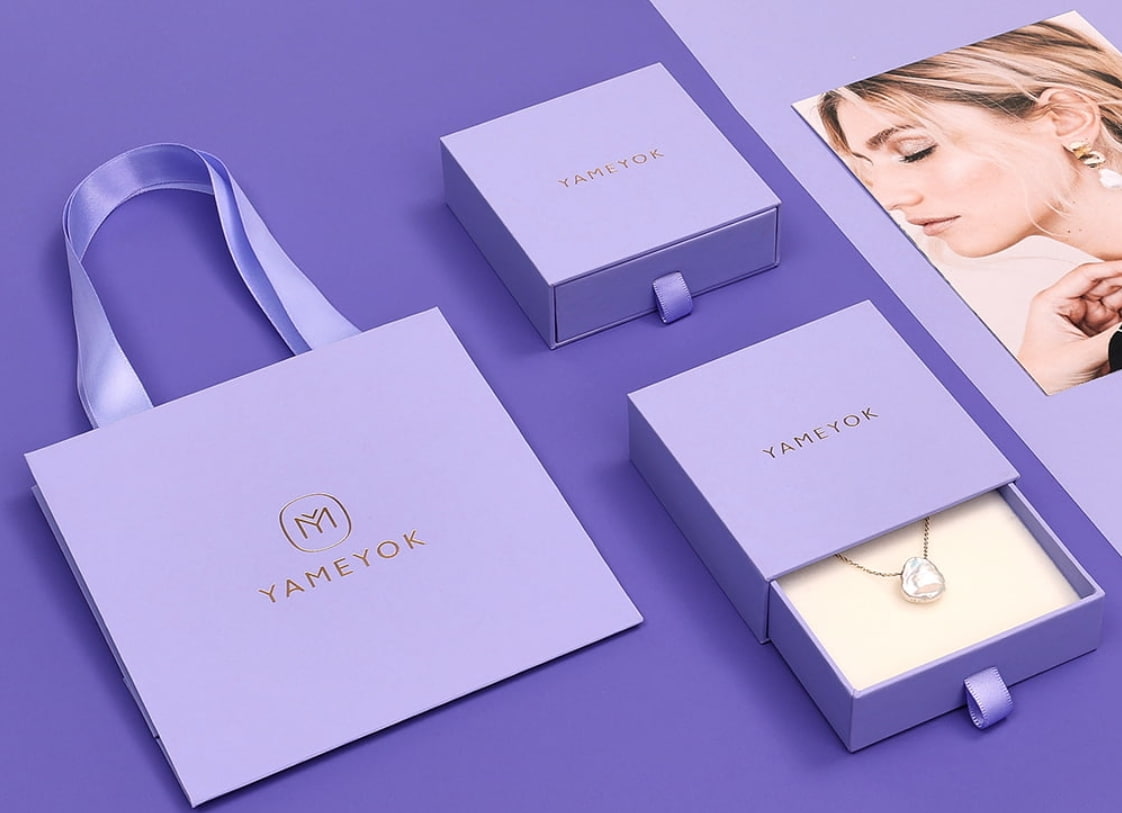
Before investing in exquisite materials, a "white sample" focusing solely on structure is created. This prototype, made from inexpensive materials, is used to test the smooth opening and closing of the custom jewelry box, structural strength, the stability of the jewelry placement, and transportation safety. Any structural defects are exposed and corrected at this stage, avoiding costly rework later.
Once the structure is correct, the most exciting stage begins – creating an appearance sample that is as close as possible to the final product. This sample box will utilize the selected real materials and processes (such as hot stamping and embossing). The brand needs to confirm the color, logo process precision, surface treatment effect, and overall texture at this stage. A successful sample means that the visual and tactile standards for the custom jewelry box have been successfully established.
Before mass production begins, both parties hold a final review meeting to confirm all details against the sample and sign a "Production Process Sheet" containing every specification parameter. This document will serve as the production bible, ensuring the consistent quality of thousands of custom jewelry boxes. Any changes after this point will result in significant increases in cost and lead time.
In the production phase, modern factories typically use a modular process: the outer box, inner lining, hardware, and other components are produced in parallel and then precisely assembled. Professional suppliers will set up multiple online quality inspection points to check materials, dimensions, and process defects after each step, ensuring that problems are eliminated before they flow into the next stage, thus guaranteeing a high yield rate for the final custom jewelry boxes.
After all custom jewelry boxes are assembled, a 100% full inspection is conducted. Products that pass the inspection are packaged in individual dust-proof and scratch-resistant packaging to ensure they arrive at the brand's warehouse in perfect condition. Professional suppliers will also provide material safety certifications (such as REACH, FSC) and other documents to ensure that the products comply with international market regulations.
The creation of an exceptional jewelry box is a meticulously crafted professional chain of interconnected steps. The eight stages, from strategy to delivery, represent a systematic transformation from concept to reality. For jewelry brands, a deep understanding of this process not only enables more efficient collaboration with suppliers but also transforms each packaging project into a predictable and controllable brand investment, ultimately making the box that holds the jewelry a trustworthy work of art in itself.