20 years jewelry packaging manufacturer,
Serving 1000+brands,Passed ISO9001/BV/SGS


You can share
- Share to Facebook
- Share to Google+
- Subscribe to our
- Share to Linkedin
- Share to Twitter
You can share

To optimize shipping costs for bulk Jewelry Packaging Sets, buyers must focus on reducing dimensional weight—a pricing method freight carriers use to charge based on cubic volume rather than physical scale weight. Because rigid paper jewelry boxes are inherently lightweight but occupy significant cargo space, shipping empty assembled boxes overseas can quickly erode procurement budgets. The most effective cost-reduction strategy involves partnering with a direct manufacturer to re-engineer structural layouts. Techniques such as box nesting, collapsible flat-pack magnetic designs, and master carton pallet optimization can reduce total shipping volume by up to 40%, directly lowering ocean and air freight expenses while maintaining brand presentation standards.
When sourcing packaging overseas, many purchasing managers focus exclusively on the per-unit manufacturing cost. However, for bulky, lightweight products like paper presentation boxes, international freight can account for a massive percentage of the total landed cost.
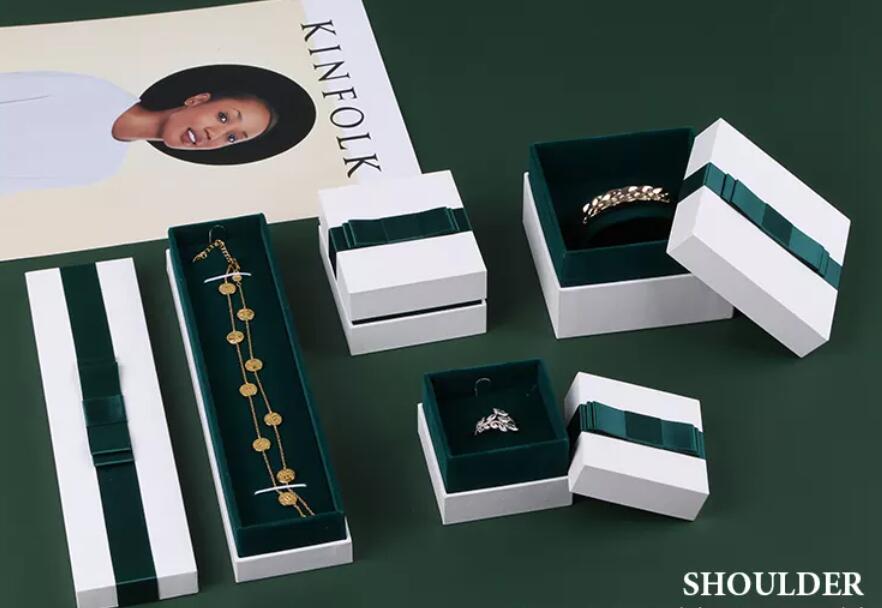
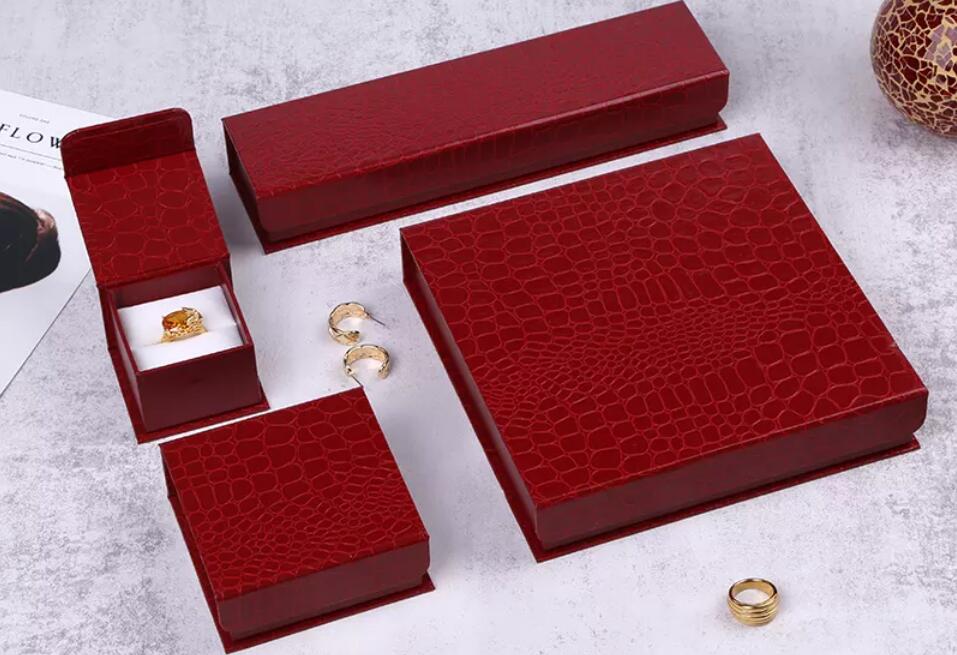
A comprehensive jewelry launch often requires matching ring containers, earring boxes, pendant cases, and shopping bags. When these items are packed and shipped separately, you are essentially paying international freight carriers to transport empty air.
Understanding how dimensional weight dictates logistics pricing allows brands to design Custom Jewelry Packaging Sets that are structurally optimized for global transit.
International shipping carriers—whether by ocean freight, air express, or courier—calculate shipping charges based on two metrics: actual gross weight and dimensional weight (DIM weight). Carriers bill based on whichever number is greater.
Dimensional weight is calculated by multiplying the length, width, and height of the master carton and dividing the result by a standard carrier divisor. Because rigid paperboard packaging has a low density, the dimensional weight of a master carton almost always exceeds its actual physical scale weight.
If a brand designs an oversized presentation box with unnecessary interior air space, the volumetric calculation skyrockets. As a result, the buyer pays a heavy financial penalty for shipping empty space across the ocean.

Lowering your freight bill requires modifying the physical architecture of your packaging before mass production begins. An experienced factory engineering team can implement three structural strategies to shrink cubic volume without compromising the retail unboxing experience.
The Multi-Tiered Nesting Strategy: When ordering comprehensive jewelry packaging sets, individual box dimensions should be mathematically calibrated to fit inside one another during transport. A ring box can be engineered to nest inside a matching bangle box, which then fits inside a larger necklace container. This doll-style nesting consolidates three separate SKUs into a single shipping unit, cutting required master carton volume by up to 50%.
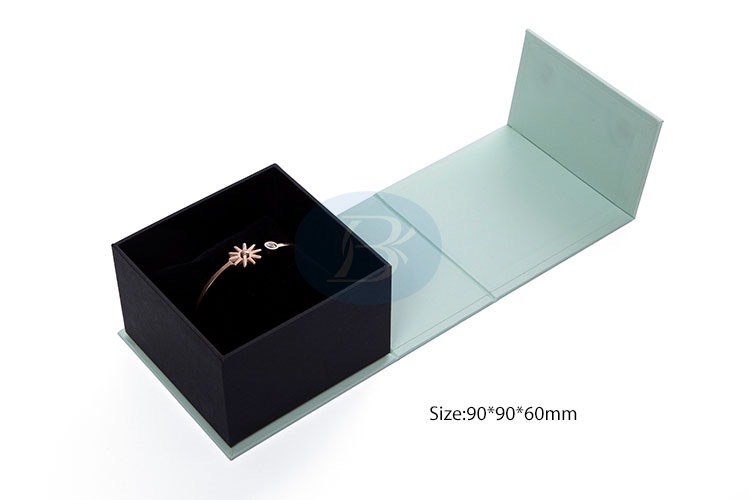
Collapsible Magnetic Flat-Pack Boxes: For larger statement pieces or multi-item presentation sets, traditional rigid setup boxes occupy immense cubic space. Replacing them with collapsible magnetic boxes offers an immediate volumetric advantage. These structures ship entirely flat from the factory and assemble in seconds at your warehouse via integrated adhesive strips and hidden magnetic closures, providing a luxury rigid feel at a fraction of the shipping volume.
Precision Insert Tolerances and Profile Shrinking: Many brands request oversized external boxes to create a perceived sense of luxury. However, shrinking the external length and width by just 5 mm to 10 mm across an order of 10,000 units removes cubic meters of wasted cargo space. Pairing a more compact outer shell with high-density EVA foam inserts ensures the jewelry remains tightly secured without relying on excessive outer box bulk.
Volumetric optimization must extend beyond the individual retail box to the outer export shipping cartons. Even if a custom jewelry box is well-designed, poor master carton sizing will result in wasted space inside standard shipping containers and pallet racks.
An efficient manufacturer calculates export carton dimensions to align with standard Euro pallets (1200 mm x 800 mm) or North American standard pallets (1219 mm x 1016 mm). By engineering master cartons that stack flush to the edges of a pallet without overhang or gaps, buyers maximize pallet density.
Furthermore, reinforcing master cartons with high-test double-wall corrugated cardboard prevents box crushing during transit. Preventing carton compression ensures that stacks remain stable, avoiding volumetric penalties or re-boxing fees at port customs.

Executing precision structural engineering at scale requires an integrated manufacturing infrastructure. Working with intermediaries or trading brokers often leads to rigid, off-the-shelf box sizes that cannot be modified for freight efficiency.
Since our establishment in 2004, we have operated as an integrated packaging manufacturer combining custom structural design, mass production, and export logistics under one roof. Our self-owned 12,000-square-meter manufacturing plant employs over 300 personnel, sustaining a daily production capacity of 150,000 paper boxes and 180,000 plastic boxes.
To support volumetric efficiency for international clients, our facility maintains an in-house 10-person R&D engineering team working alongside a 36-person quality inspection division. Before cutting steel tooling for bulk orders, our engineers utilize advanced CAD software to simulate container loading densities and calculate exact dimensional weights.
Operating under active ISO9001, BV, and SGS certifications, our production lines ensure that every structural modification—from collapsible folding scores to nested box tolerances—is executed with absolute precision, protecting your cargo from moisture and transit damage while minimizing global freight costs.
Before finalizing your packaging specifications and requesting a formal shipping quotation, audit your procurement strategy with these actionable volumetric checks:
Request DIM Weight Calculations Early: Ask your supplier to provide estimated master carton dimensions, gross weights, and total cubic meters (CBM) during the initial quotation phase, not after manufacturing is complete.
Evaluate Nesting Feasibility: Review your product catalog to identify which smaller boxes (e.g., ring or earring containers) can be dimensionally adjusted to nest inside larger presentation cases during export.
Compare Rigid vs. Flat-Pack Freight Costs: For large gift sets, request dual quotations comparing the unit price and shipping freight cost of a traditional setup rigid box against a collapsible magnetic flat-pack design.
Verify Pallet Utilization: Confirm that the proposed master carton dimensions stack efficiently onto your destination region's standard pallet sizes without leaving dead space.
Specify Carton Compression Strength: Ensure the factory uses heavy-duty, multi-layer export cartons to prevent crushing, which can alter box dimensions and trigger carrier re-weigh penalties.
Optimizing international shipping costs requires treating packaging as an engineered logistical asset. Visit our home page to explore our technical plant capabilities, or contact our R&D engineering team today to submit your current packaging dimensions for a volumetric efficiency review and custom prototype sampling.
What is the standard dimensional weight divisor used for international freight?
For international express air freight (such as DHL, FedEx, or UPS), the standard divisor is typically 5000 when measuring in centimeters (Length x Width x Height in cm / 5000 = DIM weight in kg). For standard ocean freight, volume is generally measured in cubic meters (CBM), where 1 CBM roughly equals 1000 kg of volumetric weight.
How much shipping volume can be saved by switching to collapsible jewelry boxes?
Collapsible magnetic folding boxes ship flat, which typically reduces cubic shipping volume by 60% to 75% compared to traditional, pre-assembled rigid setup boxes of the same internal capacity.
Does box nesting increase the risk of surface scratching during transport?
No, provided the factory implements proper protective interleaving. A professional manufacturer places thin, anti-static tissue paper or biodegradable protective sleeves between each nested box layer to prevent surface friction and scuffing during long ocean transits.
Can a factory calculate my exact shipping costs before mass production begins?
Yes. Once your custom sample is engineered and approved, the R&D team generates an exact packaging layout. This allows the factory to calculate precise master carton dimensions, total CBM, and estimated gross weight, enabling your freight forwarder to provide an accurate shipping quote prior to mass manufacturing.