20 years jewelry packaging manufacturer,
Serving 1000+brands,Passed ISO9001/BV/SGS

You can share
- Share to Facebook
- Share to Google+
- Subscribe to our
- Share to Linkedin
- Share to Twitter
You can share

Looking at the entire jewelry business ecosystem, many brand founders and supply chain managers often fall into a critical blind spot: they pour almost all their effort into refining the materials and crafting the designs of the jewelry itself, yet they treat the most crucial stage—packaging and delivery—with perfunctory neglect.
Imagine this: a customer receives a high-end necklace worth thousands of dollars, only to find it housed in a box made of inferior materials with flimsy, collapsing edges. The sense of luxury and prestige the product held in the customer's mind instantly vanishes. A high-caliber jewelry packaging box signifies far more than mere physical storage; it serves as a visual calling card that conveys the brand's style, an invisible catalyst for commanding a premium price, and—most importantly—the initial bridge for establishing a deep emotional resonance between the brand and the buyer.
Today, we will conduct an in-depth analysis of the core value of packaging boxes in jewelry marketing and provide you with a step-by-step professional guide to making the right purchasing decisions.
Consumers' criteria for judging a brand's "quality feel" have become increasingly multifaceted. The importance of packaging boxes is primarily manifested in the following two irreplaceable dimensions:
(1) Creating an "Unboxing Ritual" to Boost Brand Premium
Modern consumer psychology suggests that a significant portion of the pleasure derived from shopping stems from the "gift-unwrapping" process. Whether it is a telescoping lid with a satisfyingly smooth resistance, or a magnetic flip-top lid accompanied by a crisp "click," this dual sensory impact—engaging both sight and touch—subconsciously leads consumers to believe that "this piece of jewelry is well worth the price." High-end jewelry packaging boxes can directly generate a premium margin of 20% or even higher for a product.
(2) Dual Protection: Physical and Chemical
Jewelry is extremely delicate. During the bumps and jolts of long-distance logistics, the gray-board skeleton of the packaging must withstand external compression; during daily storage, the packaging must fight against an invisible enemy: oxidation. Inferior packaging—which may emit chemical fumes or contain sulfur-based adhesives—is the primary culprit behind the tarnishing and blackening of sterling silver and karat gold jewelry. Professional packaging creates a micro-climate chamber that preserves the jewelry's luster for the long term.
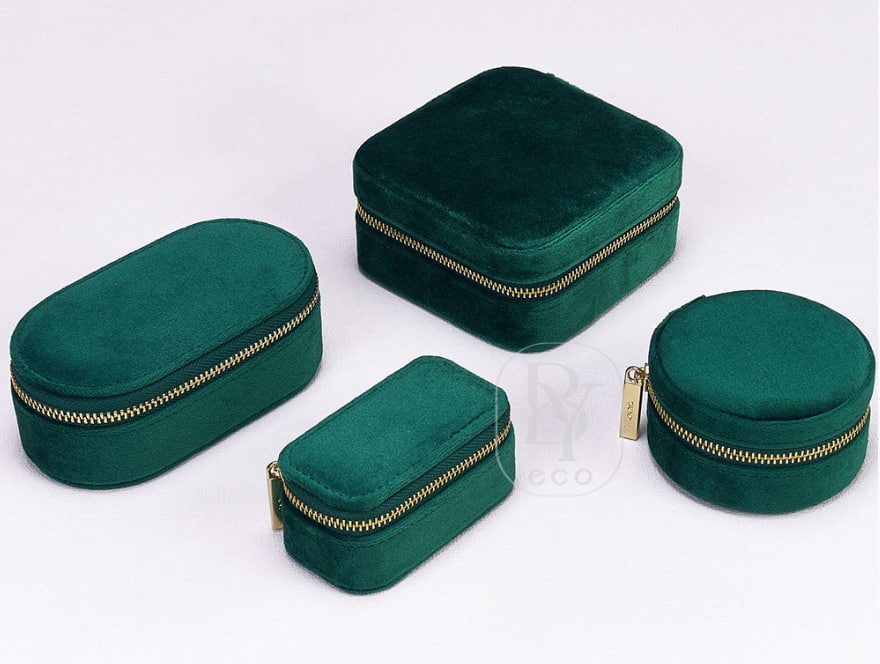
Customizing or sourcing packaging is a rigorous undertaking; you should never simply take an image found online and ask a factory for a quote. Following these four steps will help you avoid 90% of common supply chain pitfalls:
(1) Define Your Brand Positioning and Packaging Budget—Establish Your Cost Ceiling
Are you selling affordable fast-fashion accessories or high-end bespoke wedding rings? The packaging budget for the former might be just $2–3, making it suitable to purchase stock packaging using standard molds; the budget for the latter could run into the tens of dollars, requiring fully customized molds and production. Before approaching a factory, calculate the packaging cost as a percentage of your product's retail price (typically, a range of 3%–8% is recommended).
(2) Match Exterior Structure with Surface Materials—The "Skeleton and Skin."
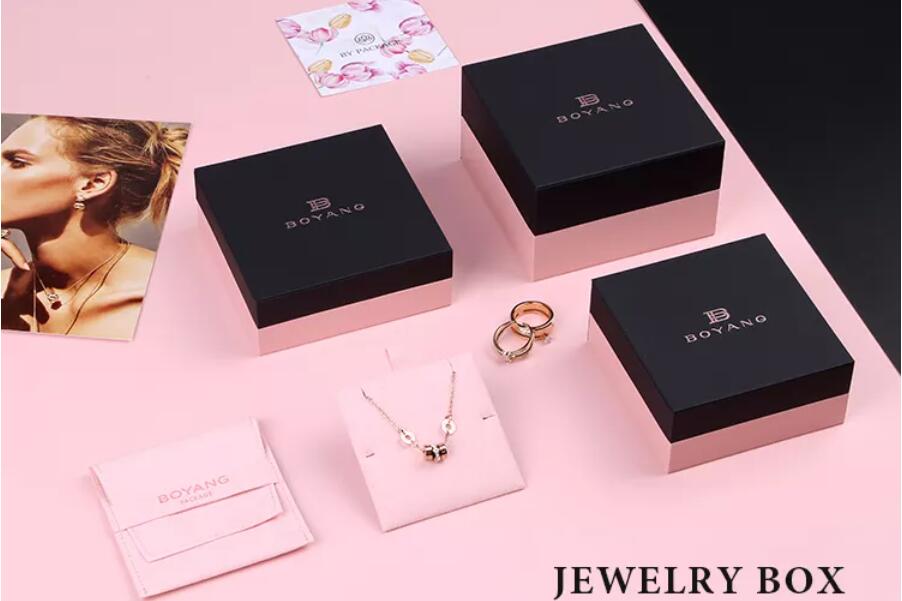
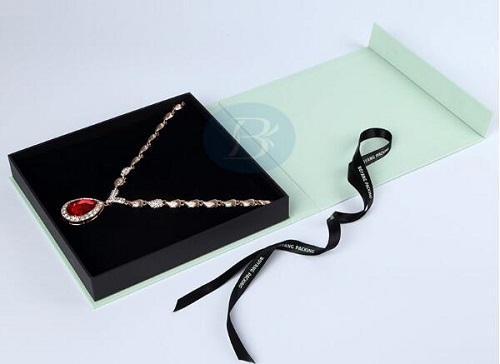
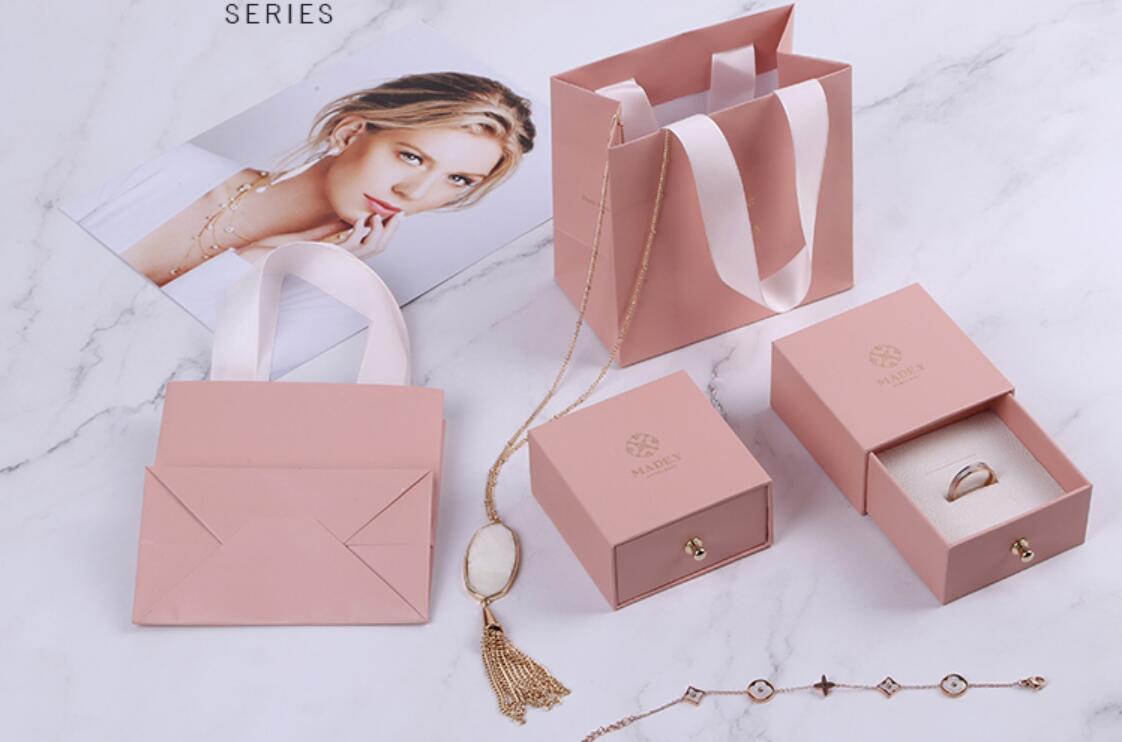
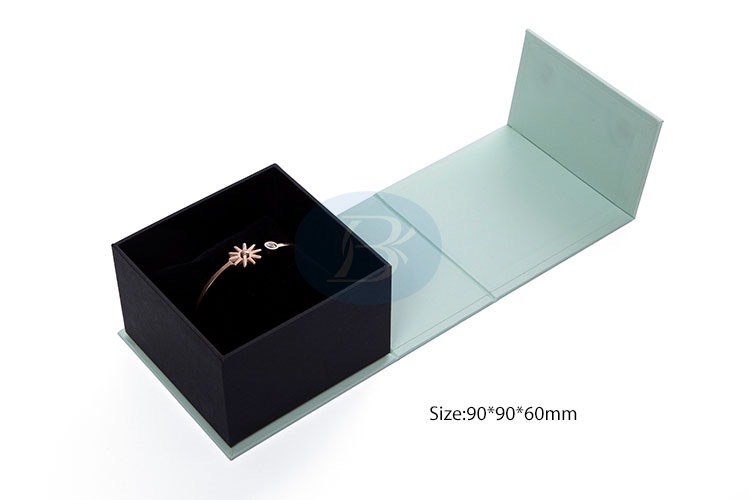
Select a structural design based on your budget: choose a "lid-and-base" (telescopic) box for cost-effectiveness; a "magnetic book-style" box for a sense of ceremony and luxury; or a "drawer-style" box for an interactive unboxing experience. Regarding materials, high-end brands currently favor tactile papers with unique textures—such as specialty textured paper, leatherette paper, or eco-friendly FSC-certified paper—rather than traditional high-gloss plastic cases.
(3) Insist on High Standards for Interior Linings and Anti-Tarnishing Properties—Protecting the "Vital Organs" of the Jewelry
This is the step where things go wrong most easily. Never use cheap, generic sponge inserts! You must require your supplier to provide "anti-tarnishing, sulfur-free" materials—such as microfiber fabric, high-quality flocking, or EVA foam. Furthermore, explicitly stipulate in your contract that the adhesive used for the lining must be a non-toxic, odorless, water-based glue to strictly prevent any pungent chemical odors.
(4) Conduct Small-Batch Prototyping and "Stress Testing" via Logistics—The Final Line of Defense Before Mass Production
Pay the prototyping fee and request that the factory provide a machine-printed color sample. Once you receive the prototype, don't just check for color accuracy and crisp corners; insert a dummy piece of jewelry of equivalent weight, drop the box twice from a height of 1.5 meters, and verify that the jewelry does not dislodge from its slot and that the box does not fall apart.
To provide you with a more comprehensive understanding of the market, we have compiled answers to several of the most pressing, practical questions currently being asked within the industry:
Q: Does eco-friendly packaging really add high cost?
A: Using FSC-certified paper and soy-based inks typically increases costs by 10%–15% compared to standard, non-eco-friendly materials. However, in Western markets—particularly among younger consumer demographics—this "sustainability" label can significantly boost brand favorability, yielding an exceptionally high return on investment in the long run.
Q: Why is there always a discrepancy between the actual color of my custom packaging boxes and the digital design mockups?
A: Computer screens display colors using the RGB light spectrum, whereas printing relies on CMYK ink pigments. Furthermore, the base tone of specialty papers can sometimes absorb ink in a way that alters the final shade; consequently, some degree of color variation is inevitable. The professional approach is to cross-reference against physical Pantone color swatches and require the factory to utilize a G7 color management system for on-press physical proofing and color matching.
Q: What can be done if jewelry frequently gets tangled or knotted inside the box?
A: This indicates a flaw in the interior lining design. For delicate, slender necklaces, the lining of a jewelry box must feature deep retention slots or incorporate a hidden storage pouch on the reverse side. When placing an order, be sure to specifically request that the factory provide an anti-tangling lining solution equipped with hooks or securing straps.
Packaging is not merely a means of protection; it is a promise. Choose a "home" worthy of your dazzling jewelry.