20 years jewelry packaging manufacturer,
Serving 1000+brands,Passed ISO9001/BV/SGS


You can share
- Share to Facebook
- Share to Google+
- Subscribe to our
- Share to Linkedin
- Share to Twitter
You can share

A single piece of jewelry damaged in a single shipment might only result in a customer complaint; however, if thousands or tens of thousands of pieces of jewelry suffer collective friction, deformation, or oxidation during bulk transportation (such as international sea freight or large-scale procurement and allocation), it represents a catastrophic financial loss for the brand.
Many buyers and brand owners have a misconception: they believe that the safety of large-volume shipments relies entirely on the outermost thick corrugated cardboard boxes and wooden pallets. In reality, the outer box can only withstand macroscopic impacts. What truly protects against fatal high-frequency vibrations, stacking pressure, and drastic temperature and humidity changes is the layer of armor closest to the jewelry—the jewelry packaging box.
In bulk logistics, a qualified jewelry packaging box is far more than just a superficial feature; it is an irreplaceable "golden bodyguard."
In bulk transportation, hundreds or thousands of boxes are tightly arranged in a large cardboard box, and multiple large boxes are then stacked on top of each other. The jewelry at the bottom layer bears tremendous vertical pressure.
The role of the packaging box: A high-quality jewelry packaging box (such as a top-and-bottom or flip-top box made of high-density grey board weighing over 1200g) is itself a miniature "load-bearing column." Sturdy edges and minimal tolerances perfectly distribute the weight transmitted from above onto the box walls, ensuring the internal space is not compressed.
A negative example: If a box with insufficient weight and soft material is used to save a few cents, the bottom box will deform and collapse under the weight. Once the outer box loses its support, the gold necklace or set ring inside will be directly compressed, causing the ring band to deform or the main stone to loosen.
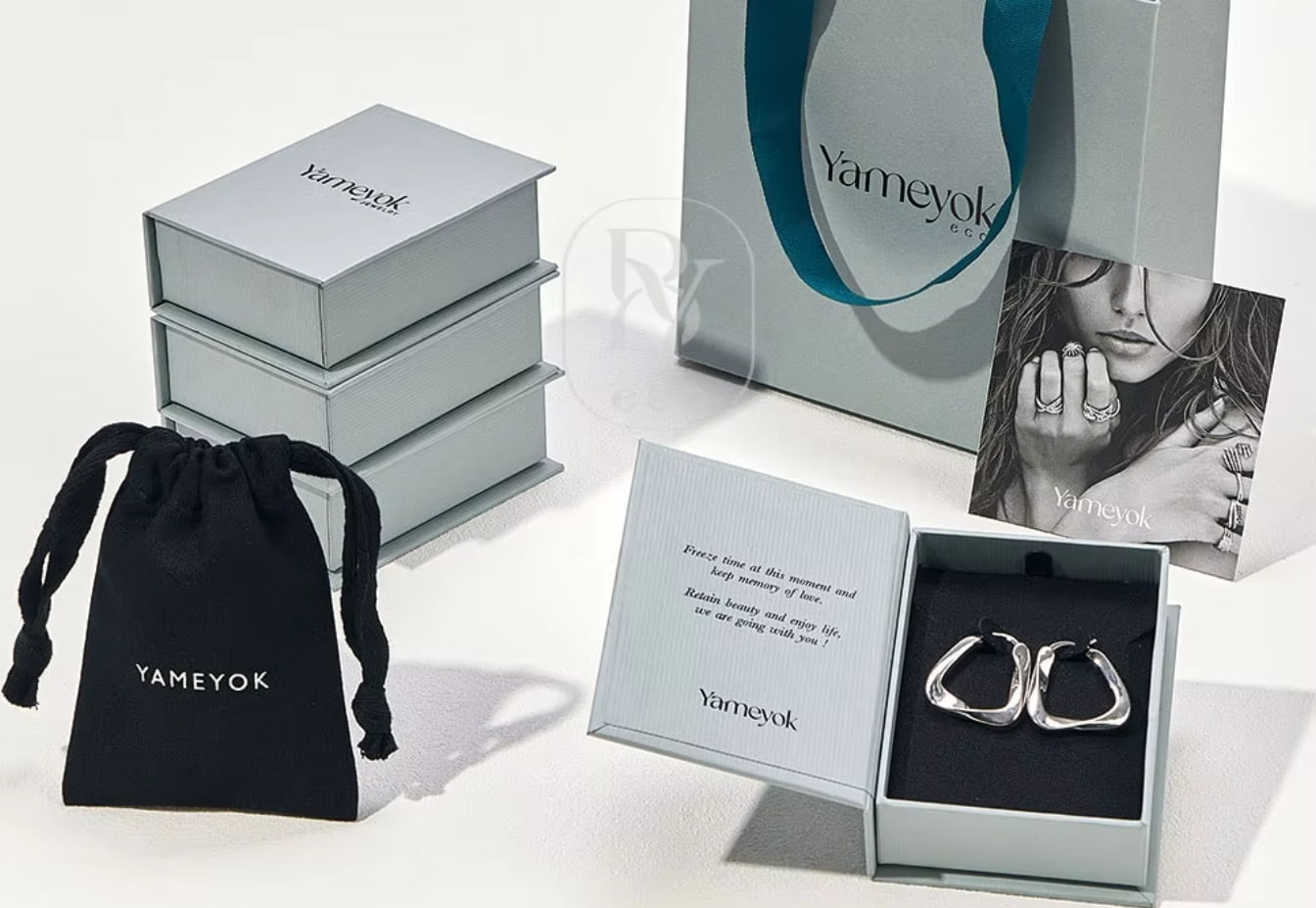
Another culprit of large-volume cargo damage is the continuous resonance and shaking generated by containers or trucks during long-distance travel.
The role of the packaging box: Standardized jewelry packaging boxes can achieve a perfect "matrix puzzle" when placed inside the outer carton (Master Carton). When dozens of boxes are arranged tightly together, there is absolutely no room for them to slide. This tight physical fit minimizes the movement of individual pieces.
Key detail: Professional packaging buyers meticulously calculate and customize the outer carton dimensions based on the box's outer diameter, ensuring a perfect fit after packing. This is the most efficient way to prevent internal collisions during large-scale logistics.
For single-item shipments, you might use cling film or straws for extra anti-tangling. However, in the transport of thousands of items, such manual operations are simply impractical. All defenses must be implemented through the design of the jewelry box's inner lining.
Core Defense Mechanism: High-frequency vibrations during transport cause jewelry to rub violently against each other inside the box. Professional jewelry box linings (such as high-elasticity EVA foam and precisely die-cut flocked trays) provide a strong sense of "physical envelopment."
For necklaces: Extremely tight clasps or a back storage bag are essential to ensure the chain won't come undone or tangle at any angle.
For rings/earrings: The depth of the sponge's opening and its resilience must be rigorously tested. A high-quality lining acts like pliers, firmly gripping the base of the jewelry, ensuring its stability regardless of how it's handled or thrown by courier workers, preventing devastating scratches on the precious metal surface.
Large quantities of jewelry shipped internationally often spend one or two months in hot and humid containers. The large temperature differences at sea easily create "container rain" (condensation) inside the containers.
The Role of Packaging Boxes: At this point, each jewelry box acts as an independent "microclimate chamber." Boxes covered with a scratch-resistant matte film or made with special leather-filled paper effectively isolate external moisture.
The Deadly Defense: More importantly, the interior must use sulfur-free, anti-oxidation lining material, and a miniature food-grade silica gel desiccant must be placed inside the box. This comprehensive approach ensures that even in harsh external environments, the inside of the box remains dry, allowing tens of thousands of sterling silver or karat gold jewelry pieces to arrive at the port looking brand new, without any signs of tarnishing.
In the battlefield of large-scale jewelry shipping, logistics insurance is merely a hindsight solution; high-quality jewelry packaging is the proactive weapon to nip risks in the bud. Don't skimp on this step, because it protects not only the physical integrity of the product, but also the brand reputation and financial security you've painstakingly built.