20 years jewelry packaging manufacturer,
Serving 1000+brands,Passed ISO9001/BV/SGS

You can share
- Share to Facebook
- Share to Google+
- Subscribe to our
- Share to Linkedin
- Share to Twitter
You can share

A meticulously engineered cardboard jewelry box delivers superior structural protection and elevates the unboxing experience through sustainable materials and precise OEM customization. For North American and European brands, transitioning from generic packaging to fully customized rigid paperboard solutions requires careful evaluation of material density, insert design, and manufacturing capabilities. This guide explores the engineering principles behind premium rigid packaging and outlines the procurement criteria for partnering with Boyang Packaging on large-scale B2B orders.
The physical foundation of any premium rigid box is not the outer decorative layer, but the internal structural core. Selecting the correct material density is critical to preventing the box from crushing, warping, or denting during international shipping and retail handling.
High-quality rigid packaging relies on compressed greyboard (also known as chipboard or high-density paperboard). The density of this material is measured in Grams per Square Meter (GSM).
800gsm to 1000gsm: This is the industry standard for lightweight to medium-weight jewelry pieces, such as stud earrings, thin chains, and standard rings. It provides excellent rigidity without adding unnecessary shipping weight.
1200gsm to 1500gsm: For heavier items like luxury watches, thick bangles, or comprehensive bridal sets, high-density greyboard is mandatory. The thicker walls offer maximum edge-crush resistance, ensuring the structural integrity of the packaging even when stacked in bulk.
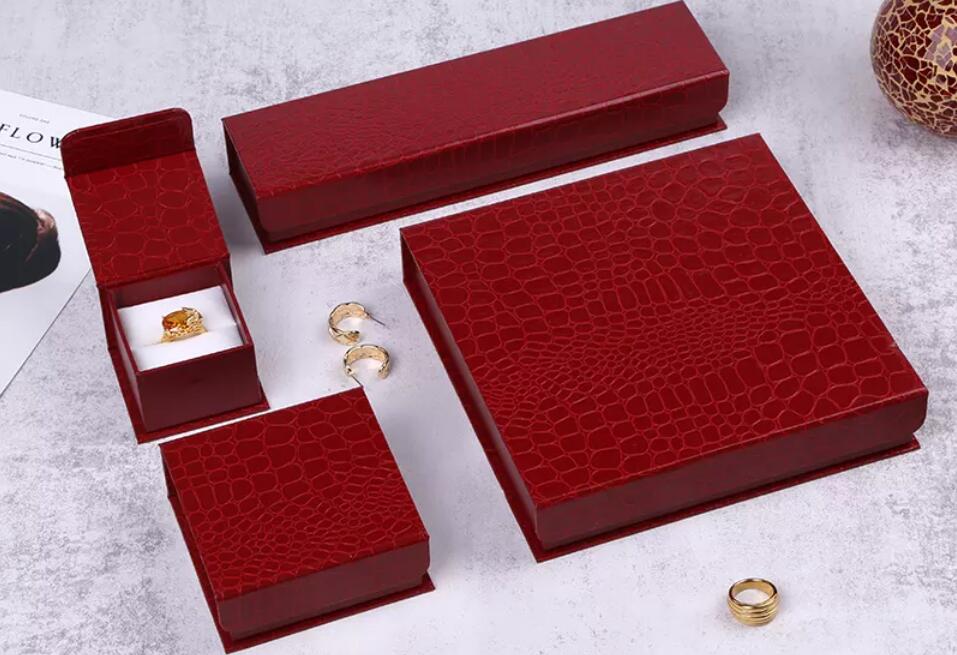
Once the greyboard core is engineered, it must be wrapped. Standard coated art paper (typically 128gsm to 157gsm) offers a smooth surface ideal for crisp, full-color printing and spot UV treatments. Alternatively, specialty textured papers (such as faux leather paper, soft-touch matte paper, or pearlescent paper) provide a tactile experience that immediately communicates luxury before the box is even opened.
As European and North American markets enforce stricter Environmental, Social, and Governance (ESG) standards, the shift toward sustainable packaging is no longer optional. Brands are rapidly moving away from traditional plastic clamshell boxes and polyurethane (PU) leather cases.
A well-constructed rigid cardboard box serves as the perfect eco-friendly alternative. The core greyboard is typically made from 100% recycled paper fibers. When paired with eco-friendly wrapping paper and odorless, non-toxic adhesives, the entire outer structure becomes fully recyclable and biodegradable. This significant reduction in the corporate carbon footprint is a powerful marketing asset for modern jewelry brands looking to appeal to environmentally conscious consumers.
The rigid exterior stops external crushing, but the internal insert prevents the jewelry from shifting, scratching, or tangling inside the cavity.
High-Density EVA Foam: Ethylene-Vinyl Acetate (EVA) foam provides superior shock absorption. It is precision-cut using CNC technology to match the exact contours of the jewelry. To elevate the aesthetic, the foam is usually topped with a layer of premium velvet flocking.
Molded Paperboard (Pulp) Inserts: For brands demanding a 100% plastic-free packaging solution, molded high-density paperboard inserts are gaining popularity. These inserts are engineered with specific slits and folding mechanisms to hold necklaces and rings securely, offering a fully recyclable solution without compromising on product safety.
Rigid greyboard can be manufactured into several distinct styles, each offering different operational benefits for B2B procurement.
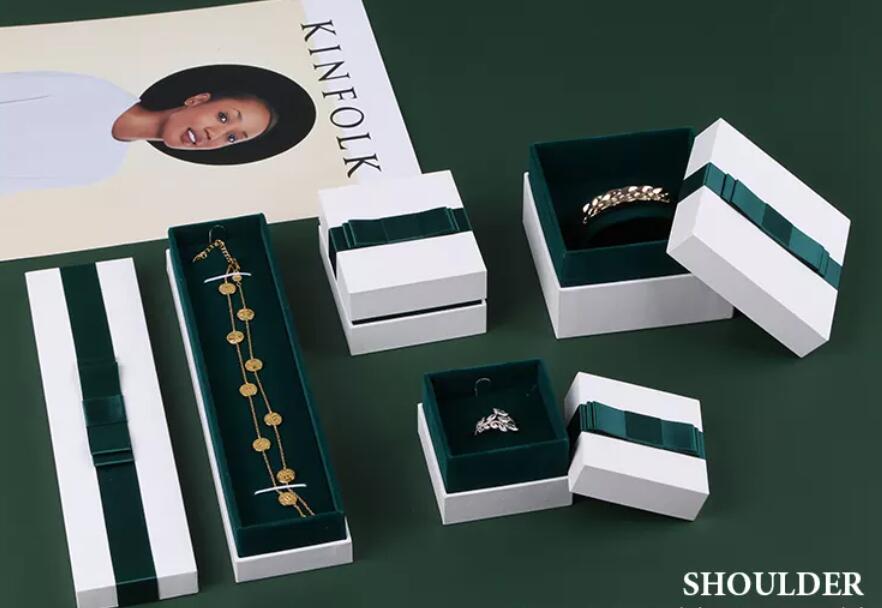
Lid-and-Base Boxes: The classic two-piece design[cite: 1]. It is the most robust option and the easiest to assemble on a fast-paced fulfillment line. Adding an inner "neck" creates a visible gap between the lid and base, establishing a premium, architectural look.
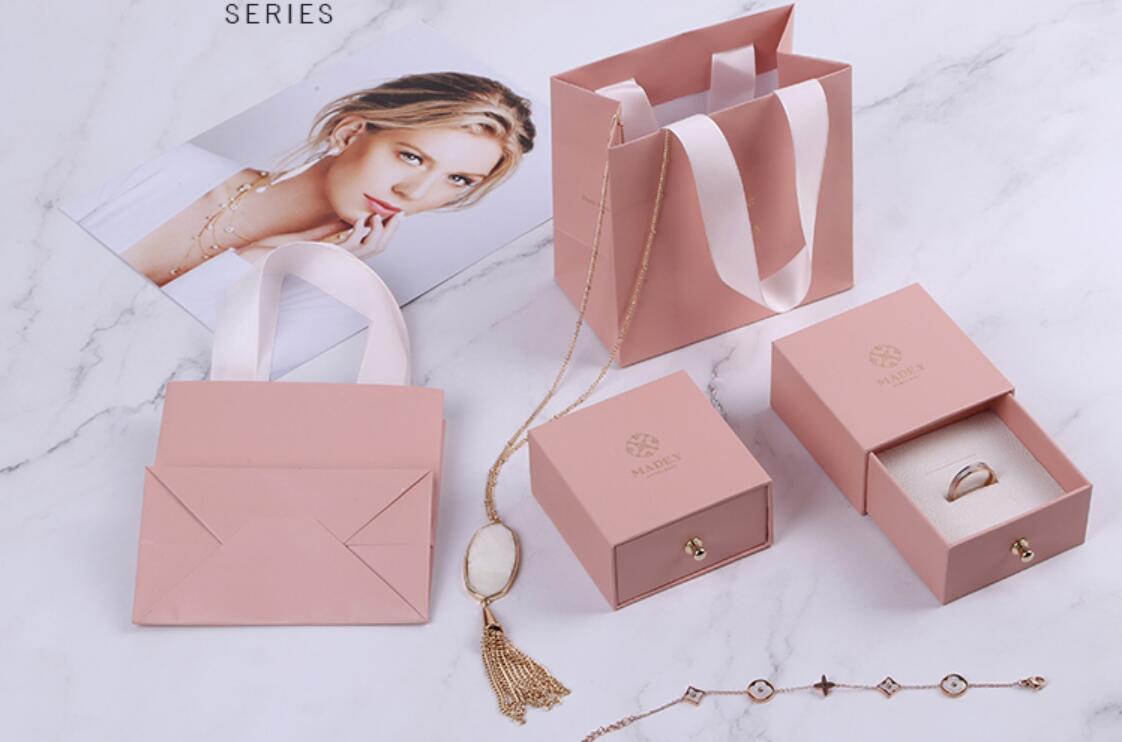
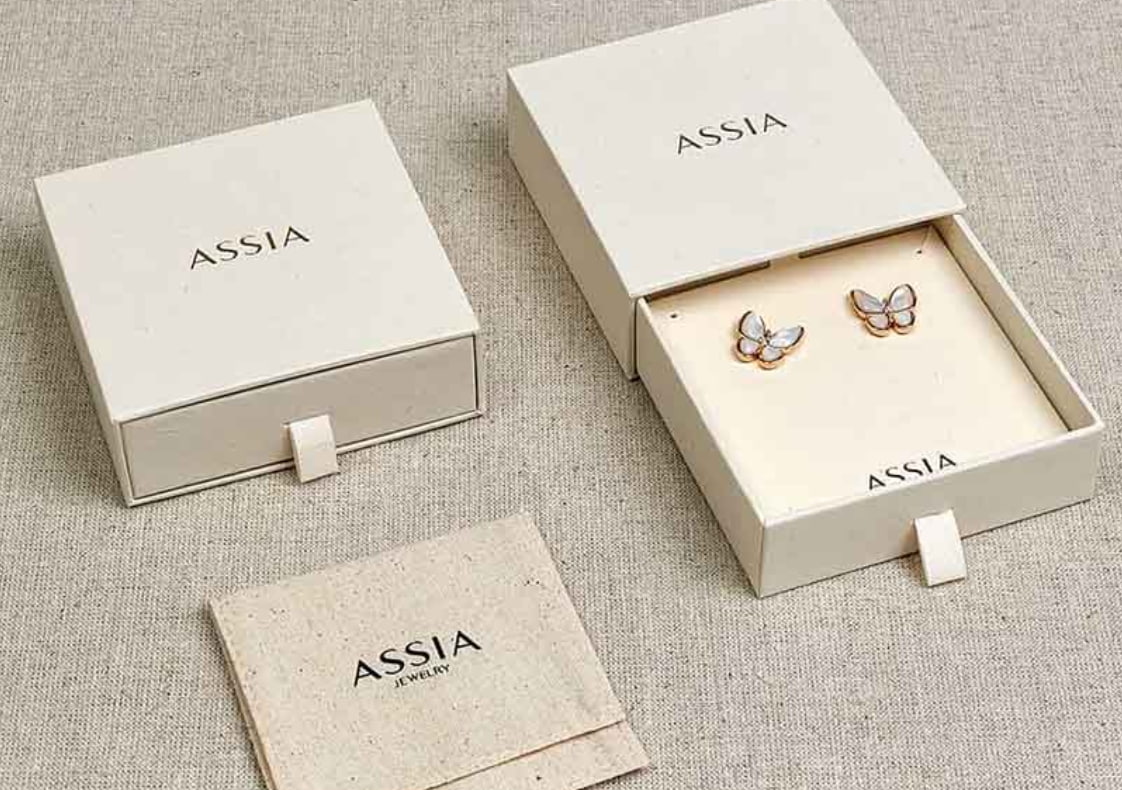
Sliding Drawer Boxes: Comprising an outer sleeve and an inner sliding tray equipped with a ribbon pull[cite: 1]. These boxes are highly space-efficient and stackable, making them ideal for high-volume retail environments and organized warehouse storage.
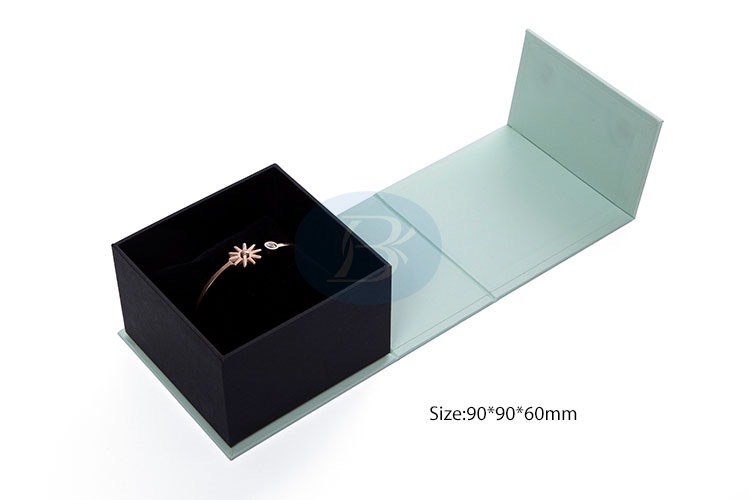
Magnetic Closure Boxes: Featuring a hinged lid with concealed magnets, this book-style structure provides a wide display area. It is frequently used for luxury presentation pieces and limited-edition collections.
Procuring customized B2B packaging requires a disciplined manufacturing workflow to eliminate errors and ensure brand consistency. Boyang Packaging follows a rigorous OEM process.
The project begins with structural engineers generating a precise 2D vector dieline based on the buyer’s product dimensions. Once the digital artwork is applied, the factory produces a blank sample to verify sizing and insert fitment. Following blank approval, a Pre-Production Sample (PPS) is created, allowing the buyer to verify Pantone color accuracy, surface finishes, and material textures.
For large-scale customized manufacturing, Boyang Packaging requires a Minimum Order Quantity (MOQ) of 1,000 pieces per design. This volume threshold is essential for the economical production of custom cutting dies, printing plates, and hot foil molds, ensuring that corporate buyers receive the most competitive unit cost possible.
How does Boyang Packaging prevent cardboard boxes from warping during sea freight?
Moisture control is a critical QC step. We strictly monitor the moisture content of the raw greyboard. During mass production, we use controlled drying environments, and every shipping carton is packed with heavy-duty desiccants (silica gel) and wrapped in moisture-barrier film to prevent humidity absorption during maritime transit.
What is the difference between corrugated boxes and rigid cardboard boxes?
Corrugated boxes contain fluted layers designed specifically for heavy-duty shipping and logistics. Rigid cardboard boxes (made from solid greyboard) are primary packaging designed for product presentation, retail display, and luxury unboxing experiences.
Are the adhesives used in your paperboard boxes safe for silver jewelry?
Yes. We strictly utilize odorless, eco-friendly, and non-toxic glues during the wrapping and assembly process. This prevents chemical off-gassing, which is the primary cause of tarnishing in sterling silver and other sensitive metals when enclosed in tight spaces.
What is the standard production time after approving the PPS?
For a standard batch meeting the 1,000-piece MOQ, mass production typically takes 15 to 25 days after the Pre-Production Sample is officially approved. Design complexity and specialized surface treatments may slightly adjust this timeline.