20 years jewelry packaging manufacturer,
Serving 1000+brands,Passed ISO9001/BV/SGS

You can share
- Share to Facebook
- Share to Google+
- Subscribe to our
- Share to Linkedin
- Share to Twitter
You can share

In the traditional perception of the jewelry industry, there often exists an invisible "hierarchy of materials": top-tier jewelry is housed in solid wood, high-gloss lacquered boxes; mid-to-high-end pieces are presented in plastic boxes wrapped in faux leather; while paper boxes seem perpetually linked to notions of "cheapness" or "fast fashion." However, if you have closely observed the international jewelry market in recent years, you will have noticed a truly disruptive phenomenon: from elite haute couture brands situated in Paris's Place Vendôme to emerging independent designers sweeping across the globe, everyone is—almost in unison—abandoning heavy wood and cumbersome plastics to fully embrace paper jewelry packaging.
What unique magic does paper possess that enables it to launch such a decisive "dimensional strike" against traditional materials? When we peel back the most obvious label—"eco-friendly"—and delve into deeper dimensions such as materials engineering, supply chain compliance, and structural aesthetics, the irreplaceable nature of paper packaging becomes abundantly clear.
The greatest pain point for custom jewelry boxes made from traditional materials lies in their extremely rigid R&D processes. Developing a brand-new plastic box requires lengthy 3D modeling and a substantial investment in injection molds (often running into tens of thousands of dollars); meanwhile, solid wood boxes demand not only complex mechanical woodworking but also endure prolonged cycles of wood drying and lacquer curing. Should the design blueprints require even a minor tweak, the entire upfront investment in molds and time is effectively wasted.
In contrast, paper serves as a true "structural canvas." The core strength of paper packaging lies in the precise calculations of its CAD cutting dies. Whether the goal is a sharp, crisp 90-degree V-groove corner or an intricate, origami-like interior insert, engineers need only adjust a few millimeter-level parameters on a computer; a CNC die-cutting machine can then produce a brand-new prototype within just a few hours. This "mold-free" agility in R&D empowers jewelry brands to keep pace with rapidly shifting market aesthetics at an exceptionally low cost of trial and error.
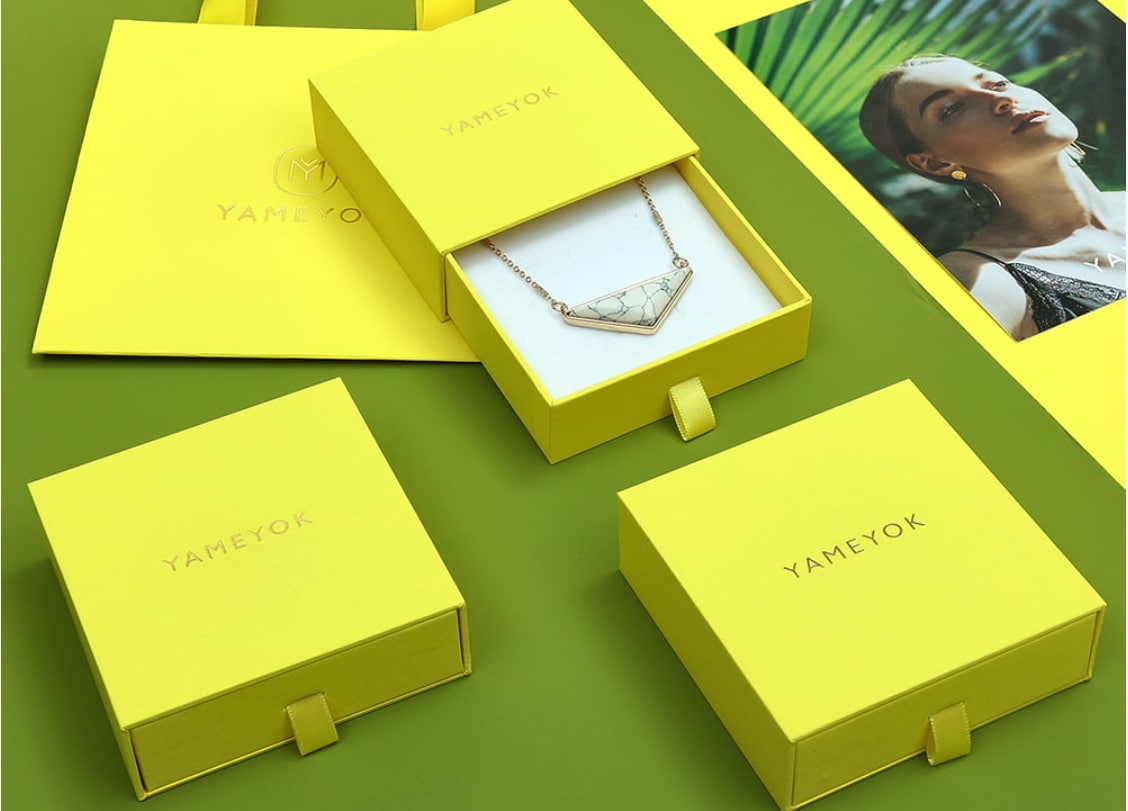
Many people’s prejudices regarding paper boxes stem from the rough, flimsy feel of ordinary cardstock. However, modern papermaking technology has long since endowed specialty papers with the "chameleon-like" ability to undergo infinite transformations.
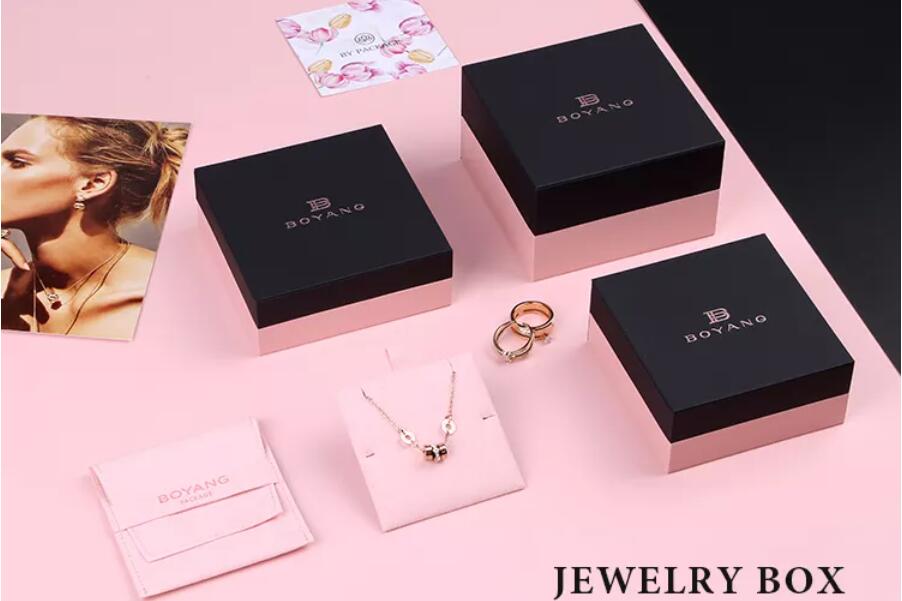
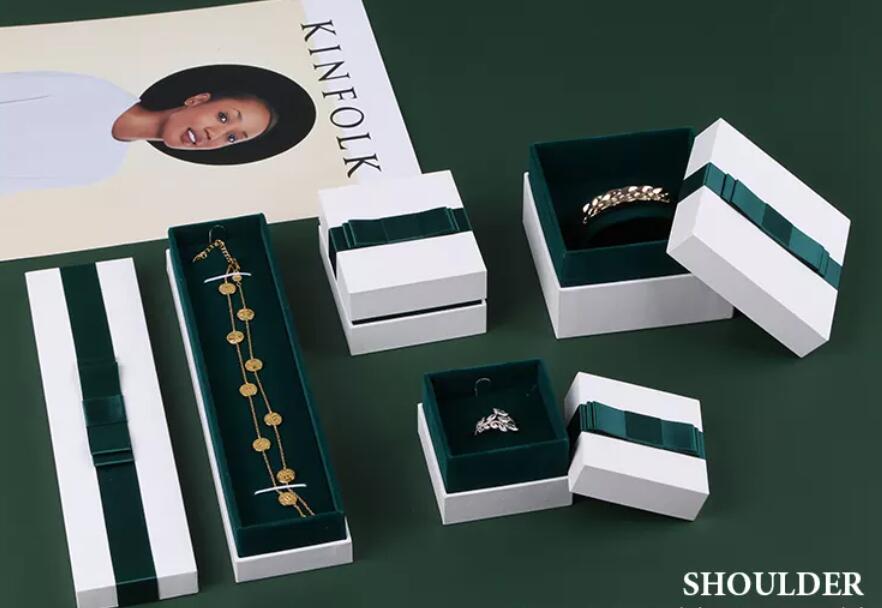
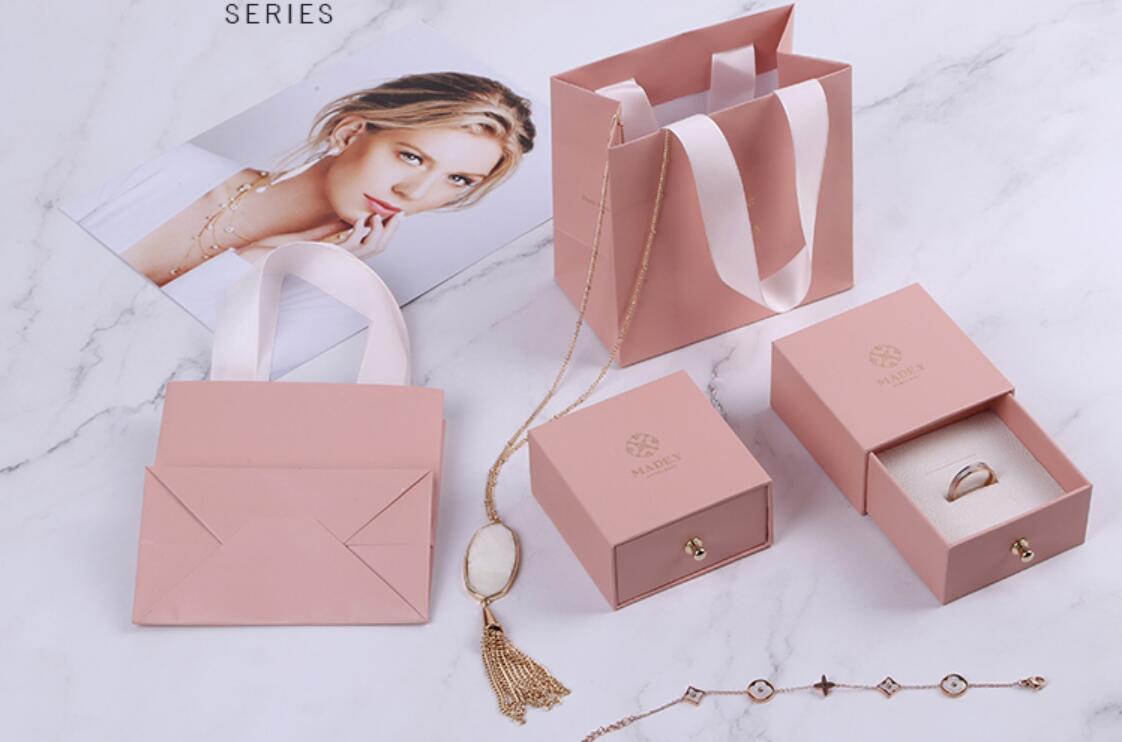
Today’s high-quality paper jewelry packaging boxes can—both visually and tactilely—realistically mimic other expensive materials. Through advanced coating and embossing processes, paper surfaces can exhibit textures as fine as calfskin, the cool luster of brushed metal, or even the soft, supple feel of a baby's skin (achieved through "soft-touch" paper). You not only gain a luxury experience comparable to genuine leather or premium velvet, but you also perfectly sidestep the ethical controversies associated with animal hides and the cheap, industrial glare inherent in plastic materials. Delivering the tactile quality of disparate materials at the cost of paper—this is a form of "magic" that no other material can replicate.
In the realm of large-scale international trade and brand globalization, packaging materials often serve as an invisible hurdle determining whether goods can successfully clear customs. In this regard, paper packaging demonstrates a commanding advantage.
If you choose to export solid wood boxes to Europe or North America, you will face extremely stringent timber fumigation requirements (such as the ISPM 15 standard) designed to prevent the introduction of invasive species; this not only increases costs but also frequently leads to delivery delays. Plastic packaging, conversely, is currently facing increasingly strict "plastic tax" penalties worldwide, as well as the extremely cumbersome testing requirements mandated by chemical restriction directives such as REACH and RoHS.
In stark contrast, paper packaging serves as a "green light" to pass through global customs and environmental regulations. By utilizing FSC (Forest Stewardship Council) certified eco-friendly paper and plant-based soy inks, goods can move unimpeded through multinational supply chains. Furthermore, in B2B business negotiations, this choice instantly establishes a sense of brand trust aligned with mainstream international values, thereby showcasing the enterprise's unwavering commitment to supply chain compliance.
In the realm of global operations, the "volume" and "weight" of packaging are directly tied to actual shipping costs—measured in hard cash. Due to the inherent rigidity of their materials, solid wood and plastic boxes exhibit extreme resistance to compression. Consequently, shipping these empty boxes essentially amounts to paying expensive international freight rates to "ship air."
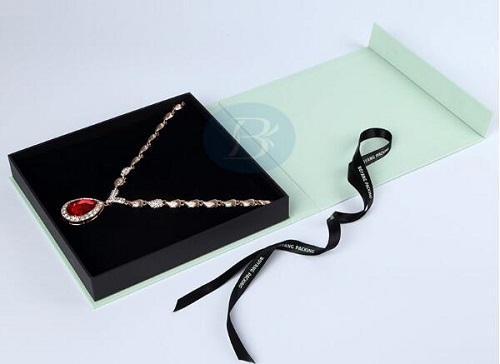
The inherent flexibility of paper-based materials offers limitless potential for structural optimization in custom jewelry boxes. For instance, through clever mechanical design, paper boxes can be engineered with a "flat-fold" structure. When shipped from the factory to various overseas warehouses, they lie as flat, thin sheets—much like books—compressing their logistics volume to just one-tenth of its original size. Yet, when needed by store staff, a simple fold is all it takes to instantly assemble them into extremely sturdy, three-dimensional, rigid gift boxes. This level of extreme physical space utilization is a feat that wood and plastic materials can never hope to match.
In summary, custom paper jewelry boxes offer a multitude of advantages. As a specialized jewelry box manufacturer, we are fully equipped to meet your specific requirements and provide both OEM and ODM services. We look forward to receiving your orders!