20 years jewelry packaging manufacturer,
Serving 1000+brands,Passed ISO9001/BV/SGS

You can share
- Share to Facebook
- Share to Google+
- Subscribe to our
- Share to Linkedin
- Share to Twitter
You can share

For high-end jewelry, the lining of a jewelry box is not only a "bonus" for enhancing its texture, but also the "first line of defense" for protecting the jewelry's luster and condition. When customizing jewelry packaging, the choice of lining material directly affects the jewelry's preservation and the brand's image. Velvet and linen are two highly favored materials, along with common types such as velvet, microfiber, and PU leather. Which one is more suitable for high-end jewelry? This article breaks it down in detail from three aspects: advantages and disadvantages, antioxidant properties, and applicable scenarios, to help you make the right choice.
Velvet, as a classic lining for high-end jewelry boxes, excels in several aspects: In terms of touch and protection, its soft and delicate texture gently adheres to the jewelry surface, effectively preventing scratches and offering excellent protection. Regarding oxidation resistance, it lacks inherent antioxidant properties and is highly absorbent, making it prone to mold growth in humid environments, indirectly damaging the jewelry. An additional anti-oxidation coating is required, making it suitable only for dry environments. In terms of suitability for different occasions and brand image, its luxurious and rich luster perfectly matches the display needs of high-end jewelry such as diamonds and colored gemstones, maximizing the brilliance of the jewelry. It is suitable for short-term displays in brand boutiques and high-end gift box packaging. However, in terms of cost and durability, it is moderately expensive, difficult to clean, and hard to maintain after staining. Long-term use can lead to pilling, resulting in only average durability.
Fine linen's core advantage lies in its natural properties, boasting distinct characteristics across various dimensions: In terms of touch and protection, its texture is relatively stiff and slightly rough, potentially causing minor abrasion to delicate jewelry such as pearls and opals; its protective properties are better suited for harder jewelry. It exhibits outstanding antioxidant capabilities, is naturally free of chemical residues, and has excellent breathability, keeping the box dry and well-ventilated, inhibiting oxidation and blackening of jewelry from an environmental perspective, eliminating the need for additional protective coatings. Regarding suitability for different scenarios and brand image, it possesses a rustic and vintage style, aligning with the brand positioning of niche high-end jewelry, antique gold and silver jewelry, making it particularly suitable for long-term storage. In terms of cost and durability, it is moderately priced, the material is tough and wear-resistant, easy to clean with gentle wiping, and does not easily deform over long-term use, exhibiting durability superior to velvet.
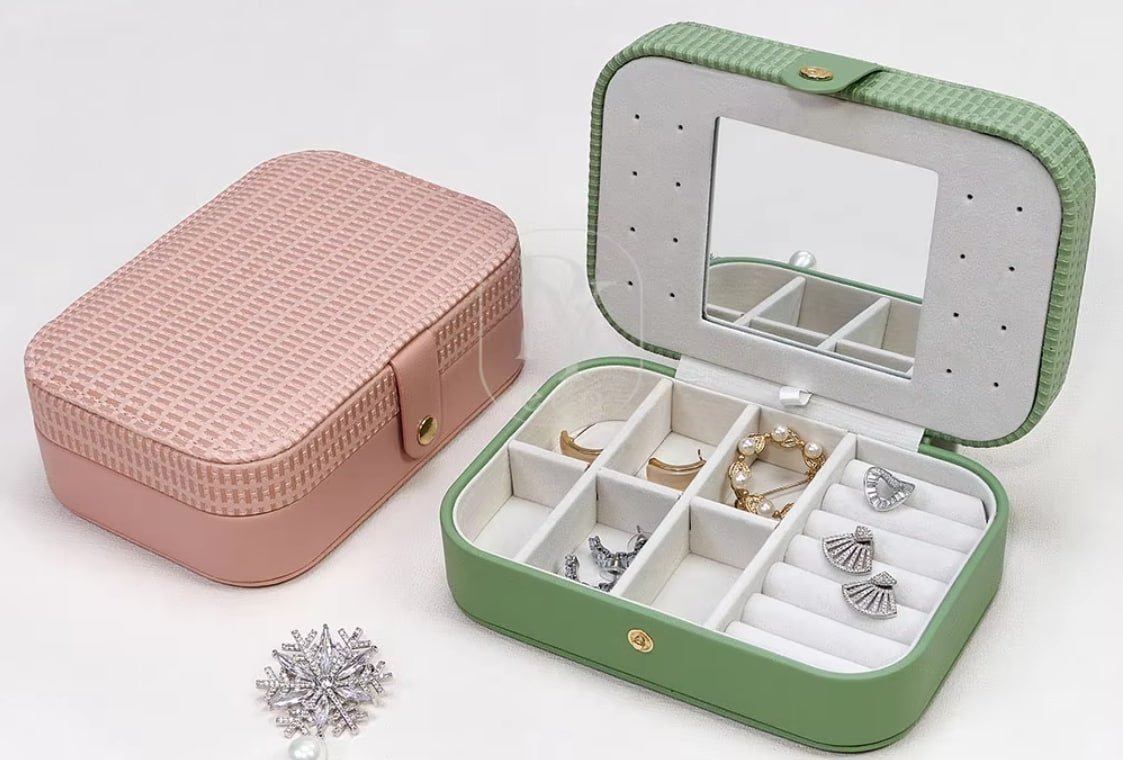
Velvet: As a high-value option, it meets basic needs in various dimensions. In terms of touch and protection, its softness is close to velvet, gently wrapping jewelry and providing basic protection. Its antioxidant capacity is average, with no active antioxidant effect, and its moisture absorption is moderate; long-term sealing can easily lead to dampness inside the box. Regarding suitability for different scenarios and brand image, its texture is simple and elegant, without a strong stylistic bias, making it suitable for daily storage of mid-to-high-end jewelry and packaging for short-term circulation products. In terms of cost and durability, its cost is relatively low, offering excellent value for money, but it is prone to pilling and deformation with long-term use, and its durability is average. Microfiber material: Offers balanced overall performance with excellent results across all dimensions. In terms of touch and protection, it combines a soft feel with strong abrasion resistance, precisely securing jewelry without scratching the surface; it has excellent antioxidant capabilities, with some products featuring a built-in anti-oxidation coating, while also being waterproof and moisture-proof, actively creating a dry and clean storage environment; in terms of suitability for different occasions and brand styles, it has a high-end feel and is versatile, suitable for the long-term preservation and frequent display of various high-end jewelry, especially for accessible luxury jewelry brands; in terms of cost and durability, the cost is relatively high, but it is easy to clean and can be repeatedly wiped, is not prone to deformation or pilling, and has strong durability, making it more cost-effective in the long run.
PU leather: Significant differences in texture and protection. In terms of feel and protection, the material is sturdy yet resilient, with a strong three-dimensional shape, allowing for the precise placement of jewelry. Its anti-theft properties are superior to fabric materials, but its firmns may cause damage if applied too tightly. It has weak oxidation resistance and poor breathability; prolonged sealing can lead to moisture buildup inside the box, accelerating jewelry oxidation. Regarding suitability for different occasions and brand image, its modern and minimalist style is suitable for packaging metal jewelry with fixed shapes (such as plain rings and simple necklaces), but not recommended for delicate items like pearls and gemstones. In terms of cost and durability, it has a moderate cost, a dirt-resistant and easy-to-clean surface, but peeling and cracking may occur with prolonged use; its overall durability is moderate.
Based on a unified comparison, selection can precisely match needs: For high-end jewelry with high hardness, such as diamonds and colored gemstones, prioritizing luxurious texture and short-term display, velvet is the best choice (for a dry storage environment); for jewelry requiring oxidation prevention, such as antique gold and silver ornaments, focusing on long-term storage and a vintage style, fine linen is the optimal choice; for those with limited budgets and basic storage or short-term circulation needs, velvet offers the best value; for those seeking comprehensive protection, durability, and a versatile style, microfiber materials are suitable for all types of high-end jewelry; for modern minimalist metal jewelry, PU leather can be considered (pay attention to controlling the tightness of the fit).
When customizing jewelry packaging, in addition to considering the material itself, it is also necessary to comprehensively judge based on the material characteristics of the jewelry, the storage environment, and the brand's image. Choosing the right jewelry box material ensures that the lining truly fulfills its protective function, allowing the value of high-end jewelry to be preserved for a long time.