20 years jewelry packaging manufacturer,
Serving 1000+brands,Passed ISO9001/BV/SGS


You can share
- Share to Facebook
- Share to Google+
- Subscribe to our
- Share to Linkedin
- Share to Twitter
You can share

Jewelry is precious and needs a special container to protect it. A custom jewelry box is an ideal choice that combines storage function with emotional value. To have a perfect custom jewelry box, a clear and standardized customization process is key. This article will focus on the customization process of a jewelry box, breaking down the key points of each step in detail, while also providing practical information, such as material selection and scene adaptation, to create a comprehensive customization guide for you.
(1) Needs Communication: Accurately Conveying Core Demands
The first step in customization is to ensure that the merchant clearly understands your core needs. This is the foundation for ensuring that the final product meets expectations. When communicating, the following key information needs to be clarified: First, storage needs, such as the type of jewelry to be stored (rings, necklaces, bracelets, etc.) and quantity, to determine the size, layer design, internal compartments, and other details of the jewelry box; second, style and elements, determining the preferred overall style (simple luxury, retro elegance, fresh and artistic, etc.), and whether to incorporate exclusive elements, such as engraving (initials, anniversaries, love quotes), patterns (couple silhouettes, family crests, hand-drawn patterns, etc.); third, materials and budget, informing the merchant of preferred materials (solid wood, leather, velvet, etc.) and approximate budget range, so that the merchant can recommend a suitable solution. It is recommended to provide more reference cases during communication to reduce information discrepancies.
(2) Design Scheme: From Conception to Visual Presentation
After the needs are communicated, the merchant will provide a preliminary design scheme based on your requirements, which usually includes floor plans, material samples, color matching, etc. This step requires close communication with the designer: carefully check whether the dimensions, structure, and placement of customized elements in the drawings meet expectations; confirm whether the texture and color of the material sample card match your expectations; if there are special process requirements (such as carving, hot stamping, inlay), clarify the process details and presentation effects. If you have any suggestions for modifications to the plan, raise them promptly. The merchant will adjust and optimize based on feedback until both parties reach a consensus and sign a confirmation form to avoid deviations in subsequent production.
(3) Sample Production: Verify the Finished Product Effect in Advance
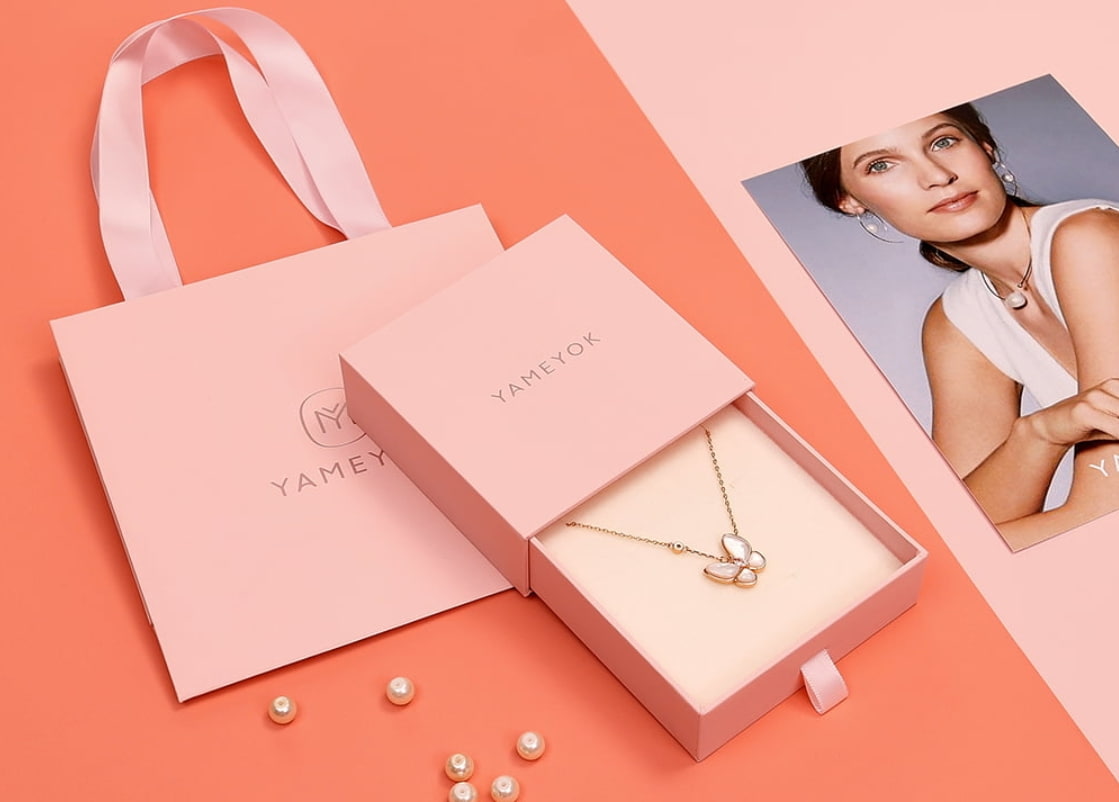
For complex customization needs, high budgets, or strict requirements for the finished product effect, it is recommended to choose a merchant that supports sample production. Sample production is a crucial step in materializing the design plan, which can intuitively present the material texture, process details, and dimensional accuracy of the jewelry box. After receiving the sample, check each detail one by one: whether the internal compartments are suitable for the jewelry size, whether the engraving clarity meets the standards, and whether the opening and closing feel is smooth. If any problems are found, communicate with the merchant in time to make adjustments. After the sample is confirmed to be correct, proceed to the mass production stage to minimize customization risks. (4) Finished Product Delivery: Key Points for Quality Inspection and Acceptance
After production, the merchant will conduct a comprehensive quality inspection of the finished product, checking whether the materials meet the standards, whether the workmanship is qualified, and whether there are any defects. After receiving the finished product, you also need to do a good job of acceptance: First, check the appearance to confirm that there are no scratches, deformations, color differences, etc.; second, check the details, checking whether the engravings, patterns, and other exclusive elements are accurate, and whether the internal structure meets the requirements; finally, test the user experience, such as whether the opening and closing is smooth and whether the compartments are stable. If quality problems are found, you need to contact the merchant in time to communicate after-sales solutions. Reputable merchants usually provide comprehensive after-sales guarantees.
In the customization process, material selection and budget control are important supporting links that affect the customization experience. In terms of materials, different materials vary significantly in texture, applicable scenarios, and price: Solid wood (such as walnut and maple) has a high-end feel and is durable, suitable for collecting high-end jewelry, and comes with a relatively high budget; leather (such as top-grain cowhide and PU leather) is simple and elegant, easy to carry, suitable for daily use and gifts, and comes with a moderate budget; velvet (such as velvet and suede) is soft and delicate, effectively protecting the surface of jewelry, often used as internal lining, but can also be used for the entire piece, and comes with a lower budget. Regarding budget control, it's necessary to allocate resources reasonably based on your own needs. For example, core budgets can be prioritized for materials and core craftsmanship, while unnecessary complex decorations can be simplified to avoid exceeding the budget.
Customizing jewelry boxes to suit specific scenarios allows their value to be fully displayed. For personal use, custom-made storage boxes can be tailored to the type of jewelry. For example, a small single-compartment box can be customized for an engagement ring, while multi-layered, multi-compartment boxes can be created for multiple pieces of jewelry, balancing practicality and commemorative significance. For gifting, boxes can be customized to suit the recipient and occasion. For instance, a leather box engraved with the names and anniversaries can be made for couples, while a vintage-style wooden box can be customized for elders, making the gift more meaningful. In commercial settings, brands can customize jewelry boxes featuring their logo and colors, serving as product accessories or peripheral gifts to enhance brand image and customer loyalty.
The core value of customized jewelry boxes lies in "exclusivity" and "suitability," and a clear customization process is the guarantee for realizing this value. From initial communication to final delivery, every step requires close cooperation between you and the vendor, accurately conveying your needs and carefully verifying details to ultimately obtain your desired, personalized jewelry box. If you are planning to customize a jewelry box, you can refer to the key points of this process, choosing a reliable vendor based on your own scenario and needs, ensuring that every sentiment is perfectly conveyed.